ADAS Levels 0 to 5, Explained Simply
The six levels of driving automation, decoded in plain English with a table, by a former calibration tech.

Key takeaways
- The levels run 0 to 5 and describe how much the car does versus how much you must do.
- Almost every car you can buy today sits at Level 2, where you assist but stay fully responsible.
- The big jump is at Level 3, where the car takes over in limited conditions and you can look away.
- Levels 4 and 5 are true self-driving, and they are barely on public roads yet.
- Marketing names blur the lines, so judge your car by what it requires of you, not the badge.
Ask five drivers what ‘Level 2’ means and you will get five shrugs, which is a shame, because the automation levels are the single clearest way to understand what your car actually does. Once the framework clicks, every confusing marketing name suddenly makes sense, and you know exactly how much of the driving is still your job.
The scale runs from 0 to 5, and it was set by engineers, not carmakers, which is why it is honest in a way ad copy is not. I calibrated systems across most of these levels, and I want to give you the version I wish every new-car buyer got: plain, specific, and free of the hype.
The core idea is simple. As the number climbs, the car does more of the driving and you do less. What changes at each step is not the technology alone but the responsibility, which is the part that matters when something goes wrong.
The six levels at a glance

Here is the whole scale in one place. I have kept the language to what it means for you behind the wheel, because that is what you actually need to know.
| Level | Name | Who drives | What it feels like |
|---|---|---|---|
| 0 | No automation | You, fully | Warnings only, like blind spot alerts. The car may beep but never steers or brakes for you. |
| 1 | Driver assistance | You, with one helper | The car handles either steering or speed, not both. Basic adaptive cruise or lane keeping alone. |
| 2 | Partial automation | You, closely supervising | The car steers and controls speed together, but you stay fully responsible with hands ready. Most new cars. |
| 3 | Conditional automation | The car, in limited conditions | The car drives itself in specific situations and you may look away, but must retake control when asked. |
| 4 | High automation | The car, within a set area | No human needed inside its operating zone. Think geofenced robotaxis, no pedals needed there. |
| 5 | Full automation | The car, everywhere | True self-driving in all conditions. Does not exist for sale. No steering wheel required. |
If you take one thing from that table, take this: the meaningful line is between Level 2 and Level 3. Below it, you are driving. At and above it, the car is, at least some of the time.
Levels 0 through 2: where your car almost certainly lives
Nearly every car on a dealer lot today is Level 0, 1, or 2. That covers the vast majority of what people mean when they say ‘driver assist.’
Level 0 still counts as automation on the scale even though the car never takes an action for you. Blind spot warnings and forward collision alerts sit here: they inform, you act. Level 1 adds a single automated control, usually adaptive cruise that manages your following distance while you steer, or lane keeping that nudges the wheel while you manage speed.
Level 2 is the sweet spot of modern cars and the source of most confusion. Here the car steers and controls speed at the same time, so it feels like it is driving on the highway. It is not. You are responsible every second, hands ready, eyes up. Systems like this are just adaptive cruise control working alongside lane centering, combined into one smooth experience that fools people into thinking it is more than it is.
Watch out
A slick Level 2 system can lull you into trusting it like Level 3. It is not. If your hands come off the wheel and your attention drifts, you are the one legally and physically driving, and the car can quit on you without warning.
Level 3: the real dividing line
Level 3 is where the responsibility genuinely shifts, and it is why the whole scale exists. In defined conditions, say a mapped highway in a traffic jam, the car truly drives itself, and you are allowed to take your eyes off the road. You can glance at your phone. Legally, in that moment, the car is driving.
The catch is the handoff. When the system reaches the edge of what it can handle, it asks you to take over, and you must be ready within seconds. That transition is the hardest part of Level 3, and it is why so few cars offer it. Only a small number of manufacturers have put limited Level 3 on public roads at all, and only in tightly restricted conditions.
This is exactly where people confuse assist with autonomy. A Level 2 car and a Level 3 car can feel similar for a mile of smooth highway, but the responsibility is worlds apart. If you have ever wondered where that line sits, the guide on whether ADAS is the same as self-driving is built around this exact gap.
Levels 4 and 5: true self-driving, barely here
Levels 4 and 5 are what most people picture when they hear ‘self-driving car,’ and they are still mostly out of reach for the average owner.
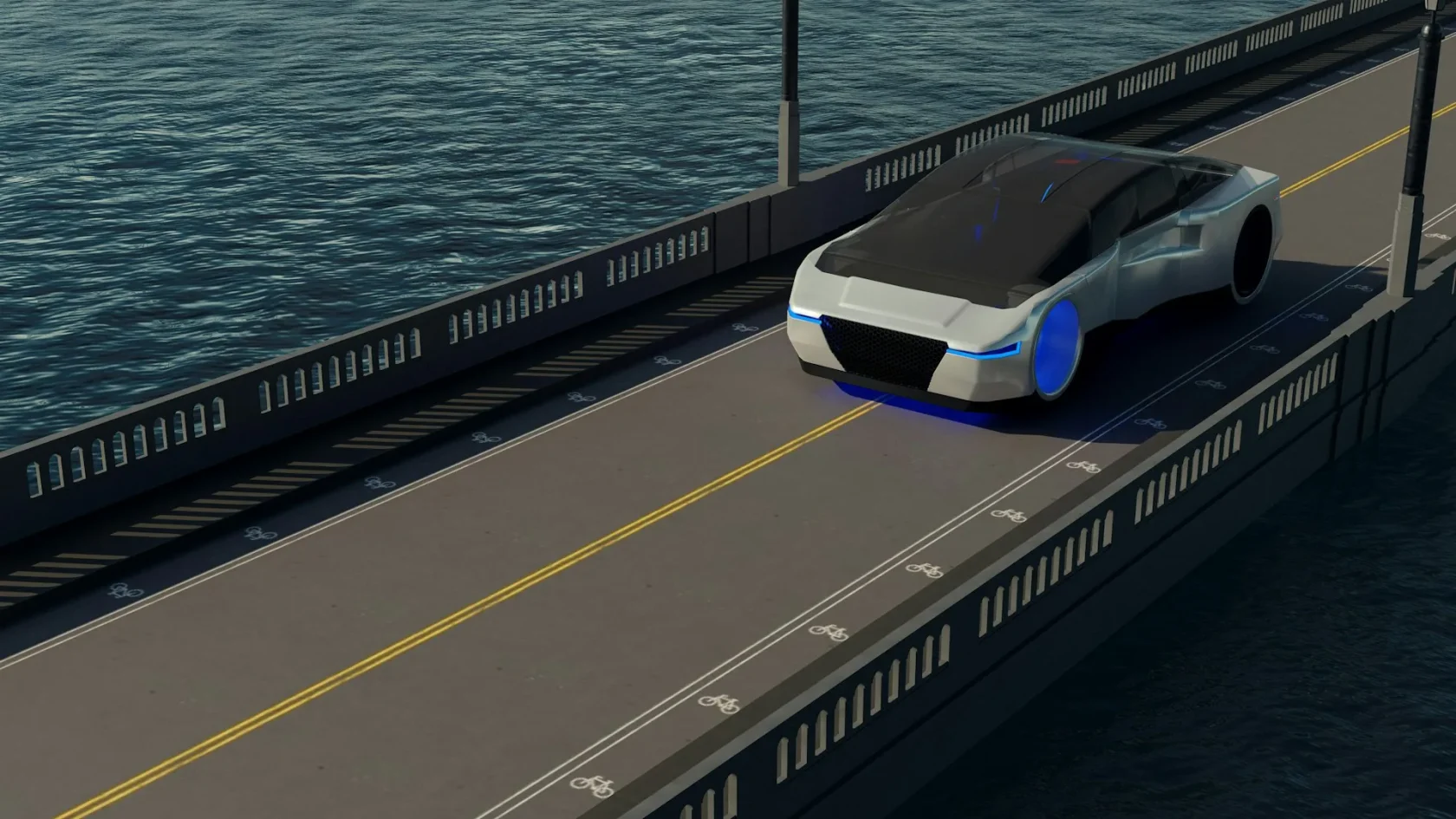
Level 4 means no human is needed within a defined zone. This is the robotaxi territory, cars that drive themselves inside a mapped city area with no one at the wheel, but that cannot go beyond their operating boundary. They exist and run in a handful of cities, but you cannot buy one for your driveway.
Level 5 is the dream: a car that drives itself anywhere a human could, in any weather, with no steering wheel required. It does not exist as a product. Anyone selling you a ‘Level 5’ car today is selling you a story.
Reality check
The car in your garage is almost certainly Level 2 or below. Levels 4 and 5 live in pilot programs and press releases, not on dealer lots. Judge your own car by what it makes you do, not by the number a brand implies.
Why the marketing names muddy all this
Here is my honest frustration from years in the trade. Carmakers give these systems confident brand names that imply more capability than the level actually allows. A name with ‘pilot’ or ‘autopilot’ or ‘full’ in it can still be plain Level 2 underneath.
The levels themselves come from SAE International, the engineering body that standardized the scale so there would be a neutral reference point. When a brand name and the real level disagree, trust the level. You can read SAE’s own summary of the framework here: SAE J3016 levels of driving automation.
The practical test is always the same. Ask what the car requires of you. If it needs your hands and attention every second, it is Level 2 no matter what the badge says. If you are new to all of this and want the ground floor first, start with the beginner’s guide to what ADAS is, then come back to the levels.
Putting the scale to use
The reason I love this framework is that it cuts through every confusing ad in about ten seconds. You do not need to memorize feature names. You just need to know which level your car sits at and what that level asks of you.
For almost everyone reading this, the answer is Level 2, which means the car is a very capable assistant and you are still the driver, fully and always. Knowing that keeps you from over-trusting a system that was never built to be trusted that far. If you want to go deeper into the vocabulary around all this, the glossary of ADAS terms every driver should know pairs well with this scale and fills in the rest.
Frequently asked questions
Almost certainly Level 2 or below. If your car steers and controls speed together on the highway but still requires your hands and full attention, it is Level 2. If it only manages one of those, or just warns you, it is Level 1 or 0. Level 3 and above, where the car can drive itself, are rare and not on most dealer lots.
Responsibility. At Level 2 you are driving every second, even when the car steers and holds speed for you, and you must stay ready to act. At Level 3 the car actually drives itself in specific conditions and you may look away, though you must retake control when it asks. That handoff is the hard part and why Level 3 is so rare.
No. Level 5 means a car that drives itself anywhere a human could, in all conditions, with no steering wheel needed, and it does not exist as a product you can buy. Level 4 robotaxis run in a few mapped cities but cannot leave their zone. Anyone claiming to sell a Level 5 car today is overstating what the technology can do.
Carmakers brand their systems with confident names that can imply more capability than the actual level allows, so a system called a pilot or autopilot may still be plain Level 2. The levels come from SAE International as a neutral engineering reference. When a brand name and the real level disagree, trust the level and judge the car by what it requires of you.
Keep reading
Related guides
Common Driver-Assist Mistakes to Avoid
Small misunderstandings about how driver-assist features work lead to the same avoidable mistakes over and over, and every one of them is easy to fix.
Read guide
ADAS and Motorcycles: What to Know
Driver-assist tech is arriving on two wheels, but it works differently and carries different risks than it does in a car.
Read guide
ADAS Explained: A Beginner’s Guide
A beginner's master guide to advanced driver-assistance systems, written by a former calibration tech.
Read guide