Lane Keeping Assist vs Lane Centering
One is an occasional nudge, the other steers with you every mile. A former calibration tech sorts the two by what they actually do at the wheel.

Key takeaways
- Lane keeping assist only nudges the wheel when you drift toward a line, then goes quiet; it is reactive.
- Lane centering steers continuously to hold the middle of the lane the whole time it is on; it is proactive.
- Both share the same windshield camera and both still require hands on the wheel and eyes on the road.
- Test yours on an empty marked highway to learn which you have, since the marketing names are inconsistent.
Two cars, two salespeople, two different names for what sounds like the same thing. One says “lane keeping assist.” The other says “lane centering.” You nod along, but nobody actually tells you how they differ, and the difference changes how the car feels in your hands every single mile.
I aimed the cameras behind both of these features for a living, and I promise the confusion is not your fault. The names are a mess across the industry, and two brands will use the same word for different behavior. So let us skip the marketing and sort them by what they actually do at the wheel.
The short version: lane keeping assist is an occasional nudge, and lane centering is a continuous hold. One steps in only when you wander. The other steers with you the whole time. Everything else follows from that one difference.
The core difference in one picture
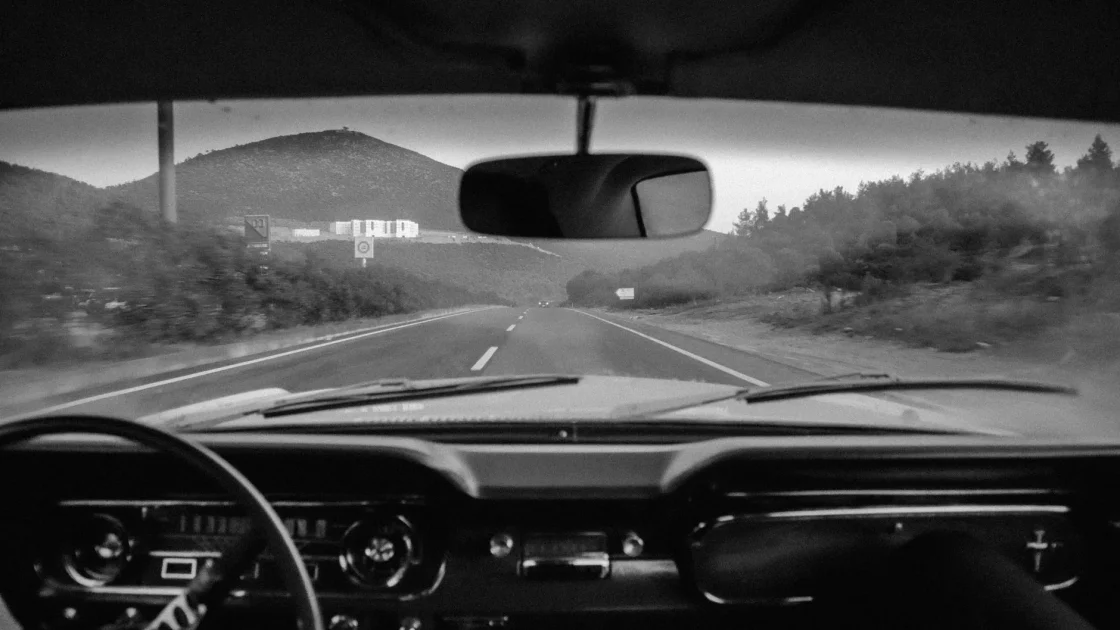
Picture a straight highway lane. With lane keeping assist, you do all the steering, and the car does nothing until you drift toward a line. Then it gives the wheel a gentle corrective push to steer you back, and goes quiet again. It is reactive. It waits for a mistake.
With lane centering, the car is actively steering the entire time to hold you in the middle of the lane. It is not waiting for you to drift; it is continuously making small steering inputs to stay centered, the way you would yourself. It is proactive. It is always working.
Both read the road through the same windshield camera, which tracks the painted lines on each side. If you are curious where that camera lives and what it sees, I wrote about the camera behind your rearview mirror. The hardware is shared; the software behavior is what splits these two apart.
Note
Both of these are different from lane departure warning, which only beeps or buzzes and never touches the wheel. If your car just alerts you and you steer yourself, that is the warning-only feature, covered in how lane departure warning works. Keeping and centering both physically steer.
Side by side
Here is the comparison laid out plainly, since the behavior at the wheel is really the whole story.
| Trait | Lane keeping assist | Lane centering |
|---|---|---|
| When it acts | Only when you drift toward a line | Continuously, the whole time it is on |
| Feel at the wheel | Occasional corrective nudge | Steady, active steering with you |
| Your job | Do the steering; it catches drifts | Keep hands on wheel; supervise constantly |
| Best on | Any marked road, as a safety net | Highways and clearly marked lanes |
| Common bundle | Standard on many new cars | Part of highway assist packages |
Notice that neither one lets you take your hands off. Both are supervised features. Lane centering can feel close to self-driving on a good highway, but it is still a Level 2 assist that expects your hands and eyes, and it will nag or disengage if it thinks you have checked out.
Which one is in your car?
The fastest test is to try it on an empty, well-marked stretch of highway. Turn the feature on, keep your hands lightly on the wheel, and pay attention. If the car does nothing until you ease toward a line and then pushes back, you have lane keeping assist. If the car is gently steering to hold the center without you drifting at all, you have lane centering.
Names can mislead you, so trust the behavior over the badge. Some brands market plain lane keeping with an impressive-sounding name, and some bundle true centering inside a larger highway driving assist package that also manages your speed. When centering and adaptive cruise run together, the car handles both steering and pace, which is where it starts to feel genuinely restful on a long trip.
Why lane centering can feel worse to some drivers
Here is a wrinkle I ran into constantly. Some people love centering and some people find it fighting them, and the reason is usually the same: they are trying to steer more precisely than the system, so their input and the car’s input tug against each other. A light hand fixes it. Guide, do not wrestle.
Centering also struggles in the same spots the camera struggles: faded paint, sharp curves, construction zones with confusing lines, and low sun washing out the markings. In those moments it may drift or hand control back abruptly, which feels worse than lane keeping simply because it was doing more to begin with. Knowing when it will bail out is half of trusting it. The independent explainer site MyCarDoesWhat has a helpful primer on lane keeping assist if you want a second plain-English source.
Lane keeping is a safety net you notice only when you slip. Lane centering is a co-pilot you feel every mile. Same camera, very different relationship with the wheel.
Turning it off, and when you should
Plenty of drivers ask me whether they should just switch these off, and the answer depends on the road and on you. On a long highway drive, I keep them on; that is exactly where they earn their keep. On tight back roads with no paint, or in heavy snow, an over-eager system can be more annoyance than help, and turning it off is reasonable. I laid out the full case both ways in the guide to whether you should turn off lane keep assist.
If yours is misbehaving rather than just annoying you, that is a different problem. A feature that will not turn on, or that steers oddly, often points to a dirty windshield, faded lines, or a camera knocked out of aim after a windshield replacement. The fixes are in the guide to when lane keep assist will not turn on. A calibration is frequently the real answer, not a new part.
Watch out
Neither lane keeping nor lane centering lets you take your hands off the wheel or your eyes off the road, no matter how smooth it feels. Both expect a supervising driver and will disengage without much warning on faded paint or sharp curves. Treat centering as help, never as a chauffeur.
Picking what matters for you
If you mostly want a quiet safety net that saves you on the day you glance away too long, lane keeping assist does that and comes standard on a lot of cars. If you do long highway miles and want the car to genuinely share the steering workload, lane centering is worth seeking out, ideally bundled with adaptive cruise so speed and steering are handled together.
Whichever you have, the same two habits make both better: keep the windshield clean where the camera looks, and keep a light, ready hand on the wheel. My honest advice after aiming hundreds of these systems is to learn precisely which one your car has by testing it, not by trusting the name on the brochure, because that one fact tells you how much the car will do and, just as importantly, how much it will not.
Frequently asked questions
Lane keeping assist only acts when you drift toward a lane line, giving the wheel a corrective nudge and then going quiet. Lane centering steers continuously to hold you in the middle of the lane the whole time it is on. Keeping is reactive and occasional; centering is proactive and constant. Both use the same windshield camera.
No. Lane centering is a Level 2 assist feature that steers to hold the lane, but it expects your hands on the wheel and your eyes on the road at all times. It will nag you or disengage if it thinks you have stopped supervising. It can feel close to self-driving on a good highway, but you are still fully responsible.
Test it on an empty, well-marked highway. Turn the feature on and keep a light hand on the wheel. If the car does nothing until you drift and then pushes back, you have lane keeping assist. If it gently steers to stay centered without you drifting, you have lane centering. Trust the behavior over the marketing name.
Yes, both can be switched off, usually through a steering-wheel button or a dashboard menu, and many cars remember your choice only until the next start. Turning it off makes sense on unmarked back roads or in heavy snow where the system may be over-eager. On long highway drives, keeping it on is where it does the most good.
Usually because you are steering more precisely than the system, so your input and the car's input tug against each other. A lighter hand fixes it: guide the wheel rather than wrestle it. It can also drift or hand control back on faded paint, sharp curves, or in low sun, which feels abrupt because it was doing more to begin with.
Keep reading
Related guides
Semi-Autonomous Driving Levels Explained
Six levels, one honest question: is the person driving or the car? A former ADAS tech decodes the automation scale.
Read guide
Adaptive Cruise vs Regular Cruise Control
One holds a speed, the other holds a speed and a gap. A former calibration tech explains the real difference.
Read guide
How Modern Driver-Assist Systems Work
The sensors, the individual features, and the honest limits of the helpers built into every new car, from someone who calibrated them.
Read guide