How Car Radar Sensors Work
A clear, hands-on explanation of the radar units that power adaptive cruise, automatic braking, and blind spot alerts.

Key takeaways
- Car radar sends out radio waves and reads the reflections to measure distance, speed, and angle to other objects.
- Most cars carry front radar behind the grille or bumper and corner radar in the rear bumper.
- Radar sees through rain, fog, and darkness far better than cameras, which is why it anchors safety systems.
- A blocked, dirty, or misaimed radar is the top reason adaptive cruise and braking features go dark.
Behind your car’s front bumper, usually low and out of sight, sits a small plastic-faced box that has quietly become one of the most important parts on the vehicle. It has no lens you can look through and no moving parts you can hear. It just sends out invisible radio waves, listens for the echoes, and from those echoes it knows how far away the car ahead is, how fast it is moving, and roughly where it sits. That box is your radar sensor, and it does more work than most drivers ever realize.
I spent years aiming these units on a calibration rack, so I have opinions about them, mostly admiring ones. Radar is the unglamorous workhorse of driver assistance. Cameras get the attention because they see lane lines and read signs, but when the weather turns filthy and the camera gives up, radar keeps working. Let me show you how it does that, where yours lives, and why it sometimes stops.
If you want the whole sensor picture first, the cameras and radar behind ADAS gives the overview. Here we are going deep on radar specifically.
What radar actually measures
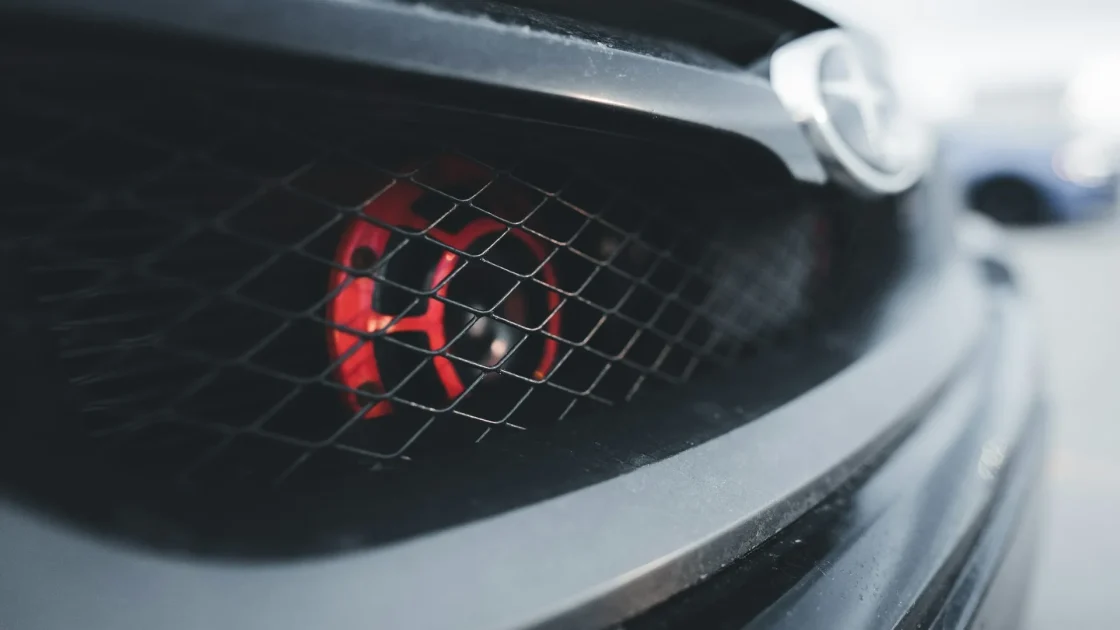
Automotive radar works on a simple, elegant idea. The sensor transmits radio waves out ahead of the car, those waves bounce off objects like other vehicles, and the sensor catches the reflections that come back. From the timing and character of those returns, it calculates three things at once.
First, distance: the delay between sending and receiving tells the sensor how far away an object is, down to a fraction of a meter. Second, speed: because of a shift in the returning wave’s frequency, the sensor knows whether an object is closing on you or pulling away, and how quickly. That frequency shift is the Doppler effect, the same thing that makes a passing siren change pitch. Third, angle: with multiple internal antennas, the sensor works out roughly where in front of you the object sits, left or right.
Distance, speed, and angle, updated many times a second. That trio is exactly what a car needs to keep a safe gap or decide a crash is coming. The National Highway Traffic Safety Administration explains how these crash-avoidance sensors feed safety features at NHTSA.
Why cars use radar instead of just cameras
The obvious question is why bother with radar when the car already has a camera. The answer is that they are good at different things, and radar covers exactly where cameras are weak.
Radar does not care about darkness; radio waves work the same at midnight as at noon. It punches through rain, fog, snow, and glare that would blind a camera. And it measures speed directly and precisely, where a camera has to infer it. What radar is bad at is detail: it cannot read a sign, tell a pedestrian from a pole with certainty, or see lane lines. So carmakers pair the two. The camera brings detail and classification; the radar brings distance, speed, and all-weather reliability, and each covers the other’s blind spots.
Good to know
This is why adaptive cruise and automatic braking often keep working in weather that knocks out lane keeping. Lane keeping needs the camera to see paint; the radar-based features can lean on the radar, which shrugs off conditions the camera cannot handle.
Where the radar sensors live
Most cars have more than one radar, and knowing where they hide explains most of the warning messages you will ever see about them.
The main forward radar sits low and central at the front, behind the grille or the lower bumper, and on many cars it hides directly behind the manufacturer emblem. That placement matters, because the emblem and the plastic in front of the sensor have to let radio waves through cleanly. My guide on the radar sensor behind the bumper covers this exact spot and why a metal aftermarket emblem can blind it.
Then there are the corner radars. Most cars with blind spot monitoring carry a short-range radar in each rear corner of the vehicle, tucked inside the rear bumper cover. These watch the lanes beside and behind you for blind spot alerts and rear cross-traffic warnings. I break them down in corner radar sensors: what they do.
What each radar powers
It helps to connect the hardware to the features you actually use, because when a feature dies, the radar behind it is often the reason.
| Radar | Location | Features it drives |
|---|---|---|
| Front long-range | Behind grille or emblem | Adaptive cruise, automatic braking, forward collision warning |
| Rear corner (left and right) | Inside rear bumper corners | Blind spot monitoring, rear cross-traffic alert |
So if your adaptive cruise quits, look to the front radar first. If your blind spot alerts go quiet, suspect a corner unit. The features are only as healthy as the sensor feeding them, which is why the next section matters so much.
Why radar sensors stop working
Here is the part I got asked about most in the shop. A radar sensor that suddenly stops is usually not broken. It is blocked, and blockage is something you can often clear yourself in a minute.
Radio waves pass through plastic but not through mud, packed snow, ice, road grime, a thick layer of bugs, or metal. So the top causes of a dead front radar are, in rough order:
- Caked snow or ice across the grille after winter driving.
- A film of road salt, mud, or dried spray over the bumper.
- A dense splatter of insects in warm months.
- A metallic aftermarket emblem or a bumper sticker over the sensor.
- A front-end knock that nudged the radar out of aim.
When any of that happens, the car is honest about it. You will get a message like radar blocked or a note that adaptive cruise is unavailable, and the feature steps back rather than guessing. That is the system working correctly. My write-up on fixing a front radar blocked message walks through clearing it step by step, including the stubborn winter cases where snow packs into the grille.
Tip
Before you assume anything is broken, walk to the front of the car and gently wipe the grille and lower bumper with a soft cloth, paying attention to the area behind the emblem. Clearing a snow plug or a bug layer fixes more radar faults than any repair does. Never scrape hard or use a metal tool on the sensor face.
Keeping radar accurate over time
Cleaning handles blockage, but there is a second issue: aim. A radar that points even a degree or two off measures the world slightly wrong, and that shows up as features that trigger late, early, or erratically. Unlike a dirty sensor, you cannot fix aim with a cloth.
Front radars get knocked out of alignment by minor collisions, bumper removal and reinstallation, or repairs to the front of the car. When that happens, the radar needs recalibration, which is a proper procedure with targets and equipment, not a guess. My complete ADAS calibration guide explains how that aiming is done and why a bumper repair is the case most relevant to radar. If a feature feels off after any front-end work, aim is the first thing I would check.
The quiet sensor that earns its keep
Radar will never be the flashy part of your car. It has no lens, makes no sound, and lives where you will never see it. But it is the sensor that keeps adaptive cruise smooth in the rain, lets automatic braking see a stopped car through fog, and watches your blind spot in the dark. Understanding it turns a scary radar blocked message into a two-minute wipe of the grille, and that alone is worth knowing.
If a warning about it is on your dash right now, the fastest route is what your ADAS warning lights actually mean, which decodes the messages one by one. Treat the radar well, keep its face clean, get it aimed after any front-end work, and it will quietly do its job for years.
Frequently asked questions
It transmits radio waves ahead of the car and reads the reflections that bounce back off other objects. From those echoes it calculates distance, closing speed using the Doppler effect, and the angle to each object, updating many times a second to feed features like adaptive cruise and automatic braking.
The main forward radar sits low and central behind the grille or lower bumper, often directly behind the manufacturer emblem. Cars with blind spot monitoring also carry short-range corner radars inside the rear bumper on each side to watch the lanes beside and behind you.
A radar blocked message almost always means something is physically covering the sensor, such as packed snow, ice, mud, road film, a dense layer of bugs, or a metallic emblem. The car disables the feature rather than guess, and gently wiping the grille and bumper usually clears it.
Yes. Wipe the grille and lower bumper, including the area behind the emblem, with a soft cloth to remove snow, mud, or bugs, and never scrape with a metal tool. If a feature still behaves oddly after cleaning, the radar may be misaimed and need professional recalibration.
Keep reading
Related guides
Why a Stone Chip Can Disable Assist
A former calibration tech explains why a tiny stone chip in the wrong spot can shut down your driver-assist features.
Read guide
The Camera Behind Your Rearview Mirror
That small black box tucked behind your mirror is the eye behind most of your car's safety features.
Read guide
The Cameras and Radar Behind ADAS
The cameras, radar, and ultrasonic sensors behind every driver-assist feature, mapped out in plain English.
Read guide