Corner Radar Sensors: What They Do
The sensors tucked in your rear bumper corners are the reason your mirror lights up when a car sneaks up beside you.

Key takeaways
- Corner radar sensors sit in the rear bumper corners and watch the areas beside and behind you.
- They power blind spot monitoring and rear cross-traffic alert on most modern cars.
- Mud, snow, ice, and a thick bumper sticker can all block their signal.
- Bumper repairs and repaints often require recalibrating these sensors.
You are merging onto the highway, you glance at your side mirror, and a little amber icon glows back at you. A car you did not notice is sitting in your blind spot. That warning did not come from the mirror and it did not come from a camera. It came from a radar sensor buried inside the corner of your rear bumper, and there are usually two of them, one on each side.
These are corner radar sensors, and they are some of the hardest-working, least-appreciated components on a modern car. Drivers almost never see them, rarely think about them, and only discover they exist when a fender bender or a warning message forces the issue. I want to change that, because understanding what these sensors do makes a whole category of dashboard messages far less mysterious.
Let me show you what they are watching and why they sometimes go quiet.
What a corner radar sensor does
A corner radar sensor is a small radar emitter tucked behind the rear bumper skin, angled outward and rearward to cover the zone your mirrors struggle with. It sends out radio waves, listens for the echoes bouncing off nearby vehicles, and measures both distance and closing speed. Unlike a camera, it does not care about darkness, glare, or light fog. It works by physics that ignore most of what blinds an optical sensor.
Because radar tracks speed so well, the corner sensors are ideal for spotting fast-approaching traffic. That is the same core technology I explain in our primer on how car radar sensors work, just aimed at the rear corners instead of straight ahead.
Most people meet these sensors through two features. The first is blind spot monitoring, which lights up your mirror when something is beside you. The second is rear cross-traffic alert, which warns you of cars crossing behind as you reverse out of a parking spot. On a lot of cars these run at the same time, sharing the same pair of sensors, which is why a single fault can knock out both at once.
The features they power
Corner radar is the backbone of several systems you probably use without thinking:
| Feature | What the corner radar does |
|---|---|
| Blind spot monitoring | Detects vehicles sitting beside or slightly behind you |
| Rear cross-traffic alert | Warns of traffic approaching from the sides as you back up |
| Lane change assist | Flags fast-approaching cars before you signal a lane change |
| Exit warning | On some cars, warns before you open a door into a passing cyclist |
If you want the deeper story on the first of those, our guide to blind spot radar sensors goes further into how the detection zone is shaped, and our explainer on rear cross-traffic alert covers the reversing scenario in detail. The takeaway is that one modest pair of sensors quietly covers several of the moments where drivers are most likely to miss another vehicle.
Where they hide
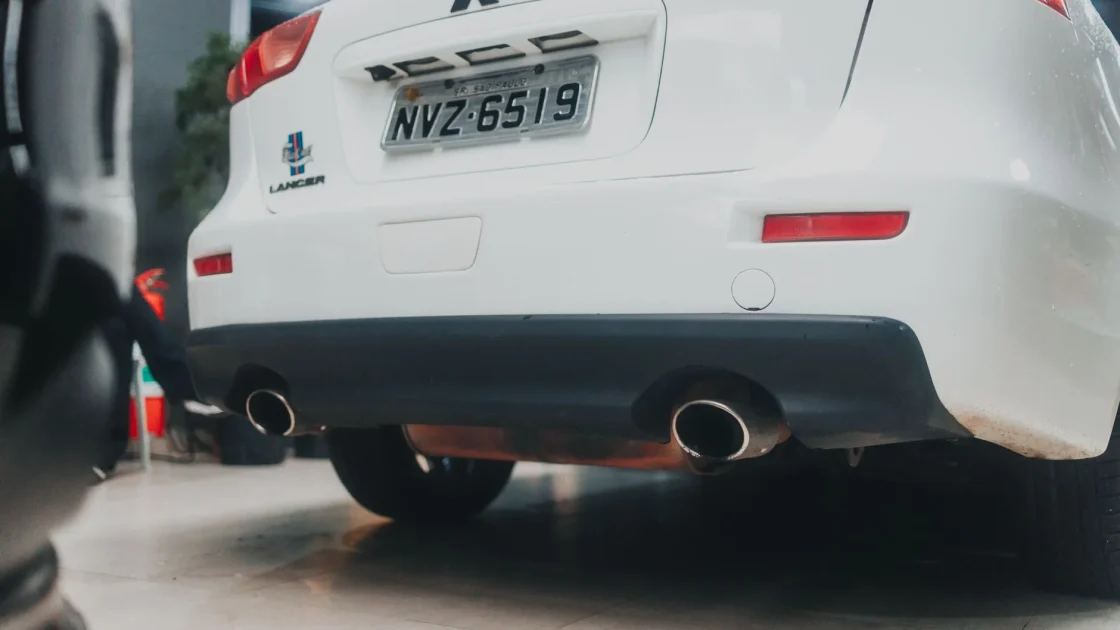
Almost always, corner radar sensors live inside the rear bumper cover, near the left and right edges. You cannot see them from outside because the bumper is deliberately designed to be radar-transparent in those spots. There is no cutout, no visible lens, just smooth painted plastic with a sensor behind it.
This hidden mounting is elegant but it creates a specific problem. Anything you do to that bumper, a scrape, a repaint, a replacement, can affect the sensor behind it. It is closely related to the setup I describe in our piece on the radar sensor behind the bumper, which faces forward but shares the same buried logic. A few cars mount the sensors slightly differently, low near the reflectors rather than at the outer edges, so if you ever need to locate yours exactly, the owner’s manual diagram is the fastest answer.
Note
Because the sensor fires through the paint, the type and thickness of that paint matters. A heavy aftermarket respray or a thick coat of bedliner-style protection over a bumper corner can weaken the radar signal enough to trigger faults.
Why they stop working
Corner radar is tough, but it is not immune to the real world. The most common reasons a sensor goes quiet are almost embarrassingly simple.
Caked mud after an off-road weekend is a classic. So is a wall of slush and road salt in winter, which can pack into the bumper corners and mute the signal until it thaws. I have seen a single bumper sticker slapped over the wrong spot knock out blind spot monitoring on one side entirely. A trailer hitch with a wide load, or bikes on a rear rack, can also confuse the sensors by sitting inside their field of view, which is why some cars ask you to switch the system off when towing.
Watch out
If your blind spot warning goes dark on just one side, look at that rear bumper corner first. A patch of dried mud, snow, or a new sticker is a far more likely cause than a failed sensor, and it costs nothing to check.
Snow and ice deserve special mention because they are so seasonal and so easy to misread as a fault. Our guide to snow and ice on ADAS sensors walks through why the systems shut down in a blizzard and when to worry. The short version: a warning that appears in a snowstorm and clears once the bumper is wiped is the system working correctly, not breaking.
Bumper work and recalibration
Here is the part that catches people out after a collision. If a rear bumper is removed, replaced, or repainted, the corner radar sensors usually need to be recalibrated or at least verified. The sensor’s aim is precise, and refitting a bumper even slightly off can push the detection zone in the wrong direction. A zone that points a couple of degrees too far out or too far in can either miss cars or nag you about vehicles two lanes over.
This is why a proper ADAS calibration after a bumper repair is not an upsell, it is part of doing the job correctly. A body shop that hands your car back without addressing the radar behind the bumper has left the job half finished. The NHTSA overview of driver assistance technologies is a solid starting point if you want an official read on how these systems are meant to function.
Keeping them honest
You do not need special tools to keep corner radar happy, just awareness. Wipe road grime off the rear bumper corners when you clean the car. In winter, clear packed snow and slush from those areas the same way you clear your lights. Skip stickers and thick coatings on the bumper corners. And after any rear-end body work, confirm the sensors were checked.
The two little radars in your bumper corners are watching the exact spaces your eyes cannot. Give them a clear path and they will keep catching the cars you miss.
Frequently asked questions
Most vehicles with blind spot monitoring have two, one in each rear bumper corner. Some higher-end cars add front corner radars as well for more advanced cross-traffic and turning features, bringing the total to four.
Not from the outside. It sits behind the painted bumper cover, which is designed to let radar pass through without a visible cutout. You would only see it by removing the bumper skin, which is why so many drivers do not know it exists.
A one-sided failure usually points to something covering that specific corner, such as mud, packed snow, ice, or a sticker. Clean the bumper corner first. If it still does not work after cleaning, the sensor or its wiring may need diagnosis.
Often yes, especially if the bumper was removed or if a thick coat of paint was applied over the sensor area. Excess paint can weaken the signal and refitting can shift the aim, so a check or recalibration after bumper work is the safe practice.
Keep reading
Related guides
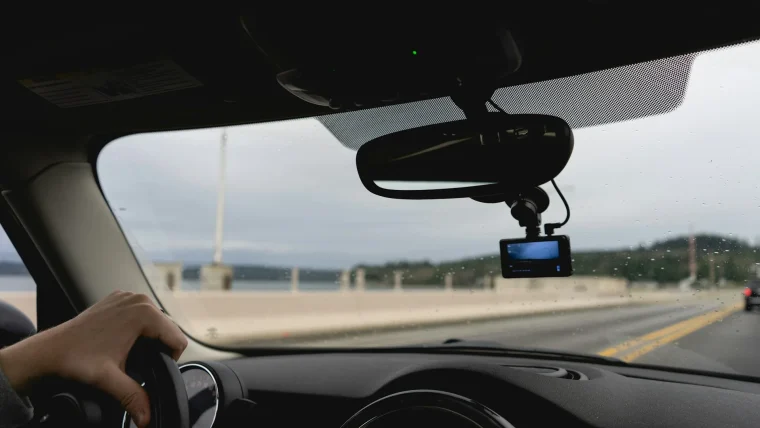
Where Is the Forward ADAS Camera?
The forward driving-assist camera hides behind your mirror, and finding it takes about thirty seconds.
Read guide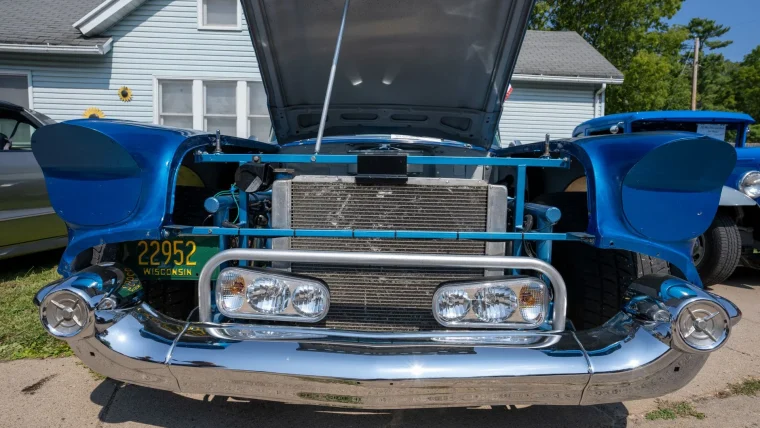
Do Aftermarket Bumpers Affect Radar?
A former calibration tech explains when a replacement bumper quietly kills your forward radar, and how to keep it working.
Read guide
Why a Stone Chip Can Disable Assist
A former calibration tech explains why a tiny stone chip in the wrong spot can shut down your driver-assist features.
Read guide