Where Is the Forward ADAS Camera?
The forward driving-assist camera hides behind your mirror, and finding it takes about thirty seconds.

Key takeaways
- The forward ADAS camera is mounted to the inside of the windshield, top center, right behind the rearview mirror.
- It sits high for a long road view and on the glass for a rock-steady aim, which is why anything on that spot can blind it.
- It is not your backup camera, and it is usually the same unit people call the camera behind the mirror.
- Because its aim is calibrated to a fraction of a degree, a windshield replacement almost always requires recalibration.
The question I get more than almost any other is a simple one: where exactly is the camera that runs all this lane and braking stuff? People ask because they want to clean it, because a shop told them it needs calibration, or because they are about to mount a dash cam and do not want to cover the wrong thing. It is a fair question with a straightforward answer.
Short version: on the vast majority of cars, the forward ADAS camera sits high on the inside of the windshield, right behind the rearview mirror. This is a question-and-answer walkthrough of exactly where it is, why it lives there, and how to spot it on your own car in about thirty seconds.
I calibrated these for a living, so I will also flag the spots people commonly mistake for the camera, and what happens if you disturb it.
Where is the forward ADAS camera, exactly?
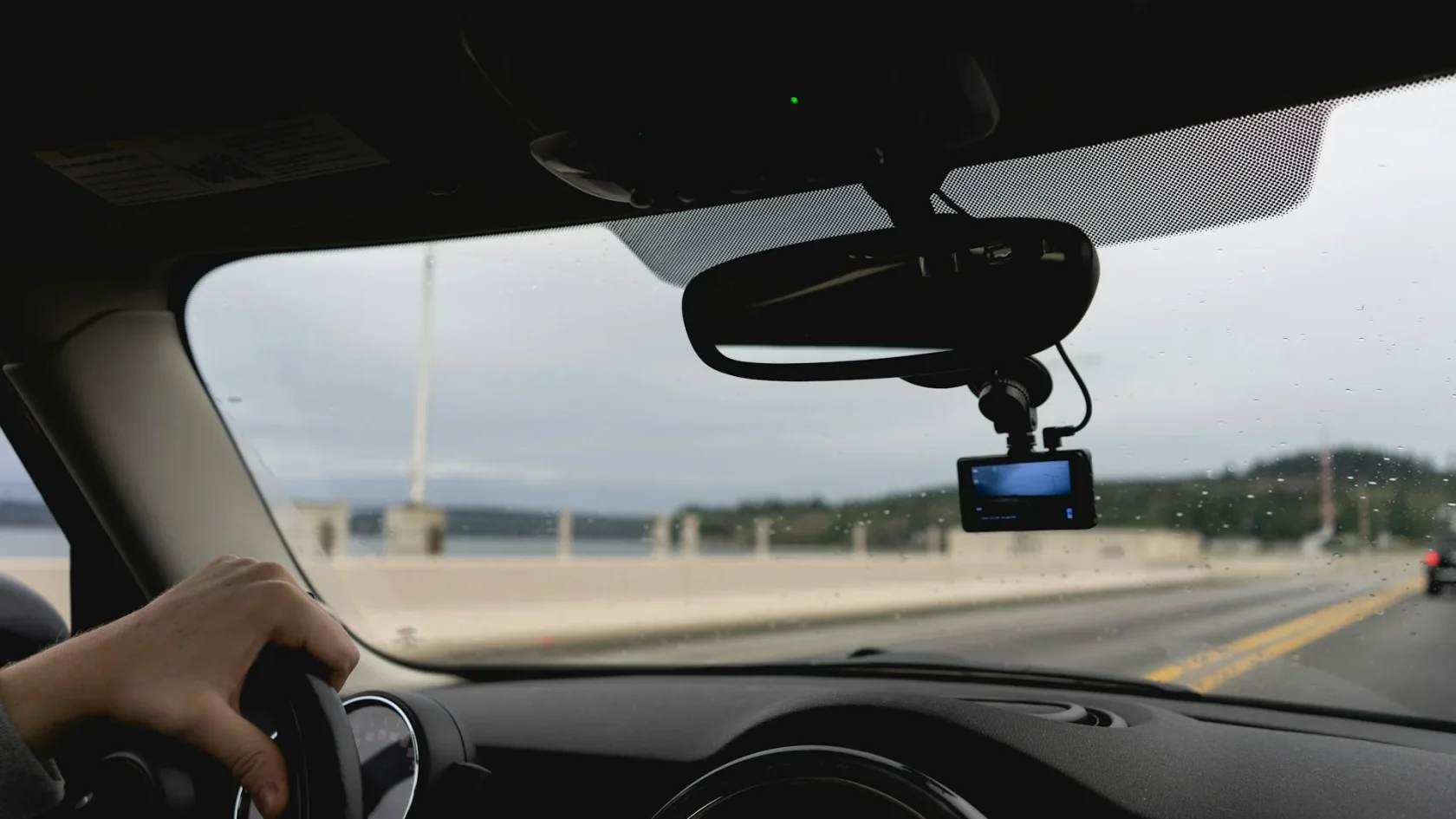
It is mounted to the inside face of the windshield, near the top center, directly behind or just above the rearview mirror. From inside the car you will see a black plastic housing or shroud hugging the glass, often shaped like a trapezoid, with the mirror stalk passing through or beside it. Behind that shroud sits the camera lens, aimed forward and slightly down at the road.
From outside the car, look at the glass just above where the mirror attaches. You will usually see a small dark rectangle or a black-painted patch on the windshield. That painted window is the clear porthole the camera looks through. On many cars there is also a matching gap in the black dot-matrix border of the glass so the lens has an unobstructed view.
Thirty-second check
Sit in the driver’s seat, look up at the rearview mirror, and follow the mirror stalk to where it meets the glass. The plastic pod wrapped around that point is your camera housing. If you see a lens looking forward through a clear patch, that is it.
Why is it mounted way up there?
Height and stability are the two reasons. Placing the camera high gives it a commanding view over the hood and further down the road, which it needs to read lane lines and spot vehicles well ahead. Mounting it to the windshield, which is rigid and fixed, keeps the aim rock-steady. A camera bolted to a flexing bumper would jitter and lose its reference.
It also shares the wiper-swept zone, so the glass in front of it usually stays clearer than the rest of the windshield. That said, it still looks through your windshield, which is why a smear, a chip, or a band of ice right there matters so much. My guide to what blocks an ADAS camera covers the everyday things that get in its way.
This camera is the heart of several features at once. It feeds lane departure warning, lane centering, traffic-sign recognition, and often the visual half of automatic braking. If you want the bigger map of the hardware, the pillar guide to the cameras and radar behind ADAS puts this camera in context with the rest.
Is it the same as the camera behind the mirror or the backup camera?
Good question, because cars carry several cameras and it is easy to mix them up. The forward ADAS camera and the camera behind your rearview mirror are usually the same physical unit described from two angles, the driving-assist camera on the windshield. It is not your backup camera, which lives at the rear near the license plate or trunk handle and only runs in reverse.
Some cars add a second forward camera for a wider field of view, or a separate rain-and-light sensor that sits in the same housing. The rain sensor is a small gel-like pad against the glass, not a lens, so do not confuse the two.
| Camera | Location | Job |
|---|---|---|
| Forward ADAS camera | Top center of windshield, behind mirror | Lane, sign, and object detection |
| Rain/light sensor | Same housing, gel pad on glass | Auto wipers and headlights |
| Backup camera | Rear, near plate or handle | Reverse view only |
What happens if the camera gets moved or the windshield is replaced?
This is where the location becomes more than trivia. The camera’s aim is calibrated to a fraction of a degree. Move it even slightly and its idea of where the lane sits can drift by several feet a hundred yards down the road. That is why a new windshield almost always means a recalibration.
If a glass shop swaps your windshield and hands the car back without calibrating, the lane and braking features may aim at the wrong spot or refuse to turn on. The guide to why a windshield swap needs recalibration explains what should happen and what to insist on.
Watch out
Do not stick a dash cam, transponder, or phone mount over the camera’s clear window on the glass. Even a partial cover can trigger a fault or make the system misjudge the road. Mount accessories to the side of the housing, never in front of the lens.
How do I keep it working?
Keep the glass in front of it clean, inside and out. The inside of a windshield builds up an oily film over time that you never notice until a low sun lights it up, and the camera notices before you do. A microfiber cloth and a little glass cleaner on the inside, right in front of the housing, fixes more phantom warnings than any scan tool.
In winter, clear ice and snow from that patch before you drive, and let the defroster run. If a camera warning does appear, clean the spot and take a short drive so the system can re-check itself. If it still complains, the guide to fixing a clean front camera message is your next stop.
Now that you can find it in seconds, the camera stops being a mystery box and becomes just another part you can look after. For the official view on how these systems are meant to help, the insurance safety group keeps a readable overview at IIHS advanced driver assistance.
Frequently asked questions
It is mounted to the inside of the windshield near the top center, directly behind or just above the rearview mirror. From outside you will usually see a small dark rectangle or black-painted window on the glass above the mirror mount. The lens looks forward and slightly down at the road.
No. The forward ADAS camera is on the windshield and handles lane, sign, and braking features while you drive forward. The backup camera is at the rear near the license plate or handle and only turns on in reverse. They are separate cameras with different jobs.
You can mount a dash cam nearby, but never directly in front of the ADAS camera's clear window on the glass. Covering that spot can trigger a fault or cause the system to misread the road. Place the dash cam to the side of the housing so both lenses have a clear view.
The camera is calibrated to aim within a fraction of a degree, and replacing the windshield moves it slightly. Even a tiny shift changes where the system thinks the lane is far down the road. That is why most manufacturers require a recalibration after any windshield swap.
Keep reading
Related guides
Ultrasonic Parking Sensors Explained
How the little round sensors in your bumpers judge distance with sound, and why they beep when nothing is there.
Read guide
Front Grille Emblem and Hidden Radar
That shiny badge on your grille might be the one part of your car you must never replace with chrome.
Read guide
Radar Sensor Behind the Bumper Guide
Your forward radar hides low behind the bumper skin, and knowing why explains half the warnings it throws.
Read guide