How Lane Departure Warning Works
The windshield camera, the lane math, and the buzz in your seat, explained by someone who aimed these systems for a living.


Key takeaways
- Lane departure warning watches painted lines with a windshield camera and alerts you only when you drift without a turn signal.
- It warns, it does not steer; the steering version is a separate feature called lane keeping or lane centering.
- Faded paint, low sun, snow, and a dirty windshield are the usual reasons it goes quiet or throws a warning.
- Most systems ignore drifts below roughly 40 mph and any lane change where you signal first.
The first time lane departure warning goes off, most people jump. You are settling into a long stretch of highway, you glance at the radio for a second, and suddenly the wheel buzzes or a chime scolds you from the dashboard. It feels like the car caught you doing something wrong. In a way it did, and that is exactly the point of the feature.
I spent years calibrating these cameras before I started writing, and the questions I got most were the simple ones. What is it actually looking at? Why did it beep that time and not this time? Why did it go silent the whole drive home last night? None of it is magic, and once you understand what the camera sees, the behavior stops feeling random.
Lane departure warning, often shortened to LDW, is one of the oldest and simplest driver-assist features on the road. It does one job: it watches the painted lines on either side of you and tells you when you are drifting out of your lane without meaning to. It does not steer. It does not brake. It taps you on the shoulder. Here is how that tap gets made.
What the camera actually sees
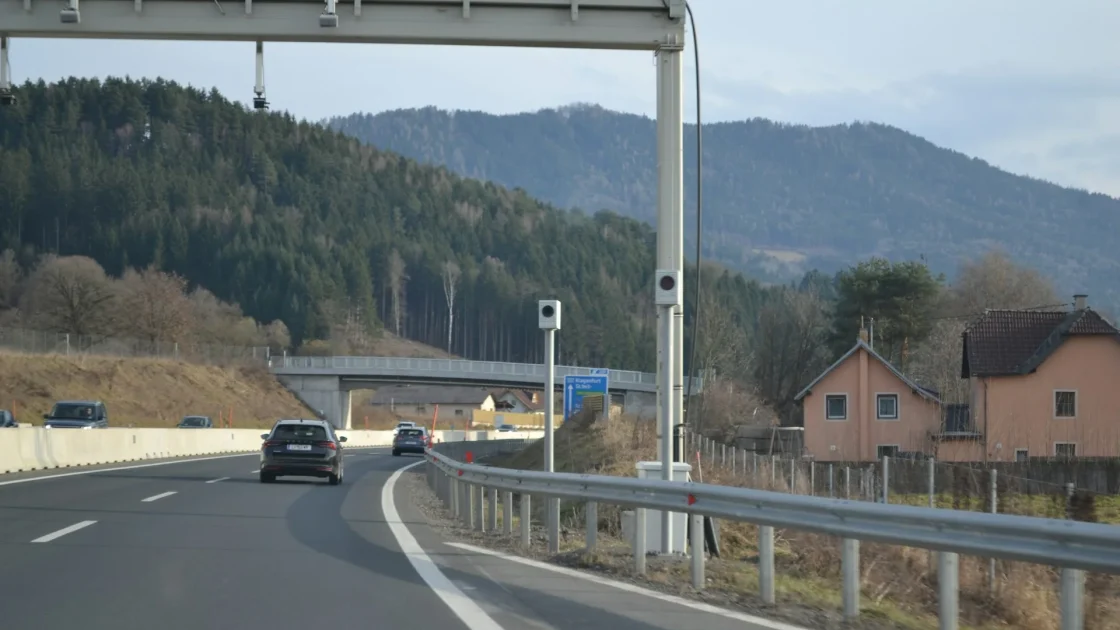
Almost every lane departure system reads the road through a single camera mounted high on the windshield, usually tucked behind the rearview mirror where you never notice it. If you want to know exactly where yours lives, I wrote a full guide to the camera behind your rearview mirror that shows the typical mounting spot on most brands.
That camera is not watching cars or people for this feature. It is hunting for two things: the lane line to your left and the lane line to your right. Software traces the paint, measures how far your tires sit from each line, and tracks whether that gap is shrinking. When your car eases toward a line and crosses it, the system fires the warning.
The camera works in the visible-light range, which means it needs to actually see the paint the way your eyes do. A faded line on a sun-bleached country road is hard for it, just like it is hard for you at dusk. A crisp white line on fresh asphalt is easy. This is the whole reason the system feels inconsistent: it is only as good as the markings in front of it. For a broader look at every sensor on the car, the overview of the cameras and radar behind ADAS puts this one camera in context.
How the warning gets triggered
The trigger logic is stricter than people expect, and that strictness is deliberate. The car does not want to nag you every time you shade toward a line on purpose.
Three conditions usually have to line up. First, you have to be above a minimum speed, commonly around 37 to 40 mph, because lane drift matters most at highway speeds. Second, the camera has to have clear lines to track. Third, and this is the big one, you cannot have your turn signal on. Flip the blinker and the system assumes the lane change is intentional and stays quiet.
Tip
If lane departure warning nags you during a deliberate lane change, use your turn signal. The system reads the blinker as intent and holds the alert. This is not a workaround, it is how the feature is designed to behave.
When all three line up and you cross a line, the car alerts you in one of three ways depending on the brand. Some vibrate the steering wheel. Some buzz the seat bottom on the side you are drifting toward, which is genuinely clever because it tells you which way you are wandering. Others just chime and flash a lane symbol on the dash. That symbol, an amber car straddling two lines, is the same one that appears on the cluster; I break down every version of it in the guide to the lane departure warning light.
Warning versus steering, a distinction that matters
This trips up almost everyone, so it is worth being precise. Lane departure warning only warns. It makes a noise or a buzz and leaves the correcting to you. If your car actively nudges the wheel to pull you back between the lines, that is a different, newer feature called lane keeping assist, and the fuller version that steers continuously is lane centering.
The two often live in the same car and share the same camera, which is why people blur them together. But they are not the same tool. One is an alarm; the other has its hands on the wheel. I lay out the full split in the comparison of lane keeping assist versus lane centering, and it is worth reading if you are shopping or just trying to figure out what your own car does.
Why does the distinction matter beyond trivia? Because your expectations change how you drive. If you think your car will steer for you and it only warns, you may lean on something that is not there. Both features are backups for an attentive driver, never a replacement, a point the whole system is built around. If you have ever wondered whether you still need to pay attention, the honest answer is always yes.
| Feature | What it does | Your job |
|---|---|---|
| Lane departure warning | Alerts you when you cross a line without signaling | Steer back into the lane yourself |
| Lane keeping assist | Nudges the wheel to correct a drift | Keep steering; it only assists |
| Lane centering | Steers continuously to hold the center | Hands on wheel, eyes on road |
Why it goes silent or throws a fault
The complaint I heard most was not that the system nagged too much. It was the opposite: it went quiet and the driver did not know why. There are a handful of ordinary reasons, and almost none of them mean something broke.
- Faded or missing paint: no lines, nothing to track, no warning. Construction zones and old rural roads do this constantly.
- Low sun at dawn or dusk washing out the camera. Glare blinds it the same way it blinds you.
- Snow, heavy rain, or road spray covering the lines or the windshield. A camera that is snowed over or rained on simply cannot read the road, so the car switches the feature off until it can see again.
- A dirty or fogged windshield right in front of the camera. This is the easiest one to fix.
- The feature simply switched off, either by you in the menu or by a stored fault.
If yours shows a steady amber warning that will not clear, and the windshield is clean and the roads are marked, the fix is usually a reset or a look at a stored code. The walkthrough on how to reset a lane departure warning light covers the safe steps before you spend money at a shop.
Watch out
A lane departure warning that stays lit means the feature is off, so that safety net is gone. Drive as though you have no lane assist at all until it clears. Never treat a warning light as a reason to pay less attention to the road.
When calibration is the real answer
Here is the part people skip, and it caused half the callbacks I ever dealt with. The camera has to be aimed. It sits at a precise angle so its math about where the lines are actually matches reality. Knock that angle off and the system either warns at the wrong moments or gives up entirely.
What knocks it off? A windshield replacement is the big one, because the camera comes off the glass and goes back on, and it has to be recalibrated to see straight again. A front-end collision, a suspension change, or even a ride-height shift can do it too. If your warning started right after glasswork or body repair, calibration is almost certainly the cause, not a broken camera. The Insurance Institute for Highway Safety has solid background on how these lane systems cut real-world crashes, which is a fair reminder of why keeping the aim correct matters: IIHS advanced driver assistance.
One Mazda I calibrated last winter came in because lane departure warning fired constantly on a perfectly straight road. The owner assumed the camera was dying. It turned out a windshield shop had replaced the glass and skipped the recalibration entirely, so the camera thought the lines were closer than they were. Twenty minutes on the target board and it behaved perfectly. That is the pattern more often than not.
Getting the most out of it without being annoyed by it
Lane departure warning earns its keep on long, monotonous drives, exactly when your attention is most likely to wander. The people who hate it are usually the ones fighting it in stop-and-go traffic or on narrow back roads where it has no business chiming. The people who love it are the ones who let it be a quiet backstop on the interstate.
My honest take after aiming hundreds of these: keep it on, keep your windshield clean, and use your turn signal every single time you change lanes. Do that and the system all but disappears until the one moment you actually need it, which is the whole idea. If it starts nagging for no reason, treat it as a clue that the camera cannot see well or has drifted out of aim, not as a gremlin. Clean the glass, check the paint, and if it still misbehaves, get the aim checked before you assume the worst.
Frequently asked questions
No. Lane departure warning only alerts you with a chime, a steering-wheel vibration, or a seat buzz when you drift out of your lane. The feature that actually turns the wheel is a separate one called lane keeping assist, and the version that steers continuously is lane centering. Many cars have both, but the warning by itself never touches the steering.
It needs clear painted lines and a clean view through the windshield. Faded paint, snow, heavy rain, road spray, or low sun glare can all stop the camera from reading the lines, so the system goes quiet on purpose rather than acting on bad data. Most cars also switch it off below roughly 40 mph and whenever your turn signal is on.
Constant false alerts on a straight road usually mean the camera is out of calibration, most often after a windshield replacement or front-end repair. The camera is aimed at a set angle, and if that angle is off it misjudges where the lines are. A shop can recalibrate it on a target board, which typically takes well under an hour.
Yes, almost every car lets you disable it through a button or a menu in the instrument cluster, though many reset it to on each time you start the car. It is fine to turn off for a specific trip on twisty back roads where it nags, but it does the most good on long highway drives when attention drifts. Leaving it on as a quiet backup is what most people settle on.
Keep reading
Related guides
Driver Attention Monitoring Explained
The steering sensors and face-tracking cameras that decide you need a break, decoded in plain English.
Read guide
How Adaptive Cruise Control Works
A former calibration tech explains the radar, the following-distance math, and how to actually use adaptive cruise without getting surprised.
Read guide
How Trailer Assist Works With ADAS
Hitch up a trailer and your driver-assist features change. A former calibration tech explains what shifts and why.
Read guide