How Automatic High Beams Work
The camera that flips your brights on and off for you at night, and how to get it to behave.

Key takeaways
- Automatic high beam assist uses the windshield camera to detect oncoming and leading vehicles and dims your brights for them.
- It switches your high beams on when the road is dark and empty and off when it sees other traffic or bright areas.
- It works only above a set speed and needs a clean, unobstructed camera to see oncoming headlights and taillights.
- It can be fooled by reflective signs, streetlights, and bright reflectors, so you can always override it manually.
Driving a dark country road at night is a small balancing act you probably do without thinking. You flick the high beams on to see farther, then dim them the instant headlights crest the hill so you do not blind the other driver, then flick them back on once they pass. Do it for an hour on a winding rural highway and it becomes a chore. Automatic high beam assist exists to take that chore off your hands, and when it works well you forget it is even there.
I spent years calibrating the cameras that make this feature possible, and it is one of the more satisfying ones to explain because the idea is so simple and the execution is so clever. The car is not guessing. It is genuinely watching the road ahead for the light signature of other vehicles and reacting faster and more consistently than your thumb ever could.
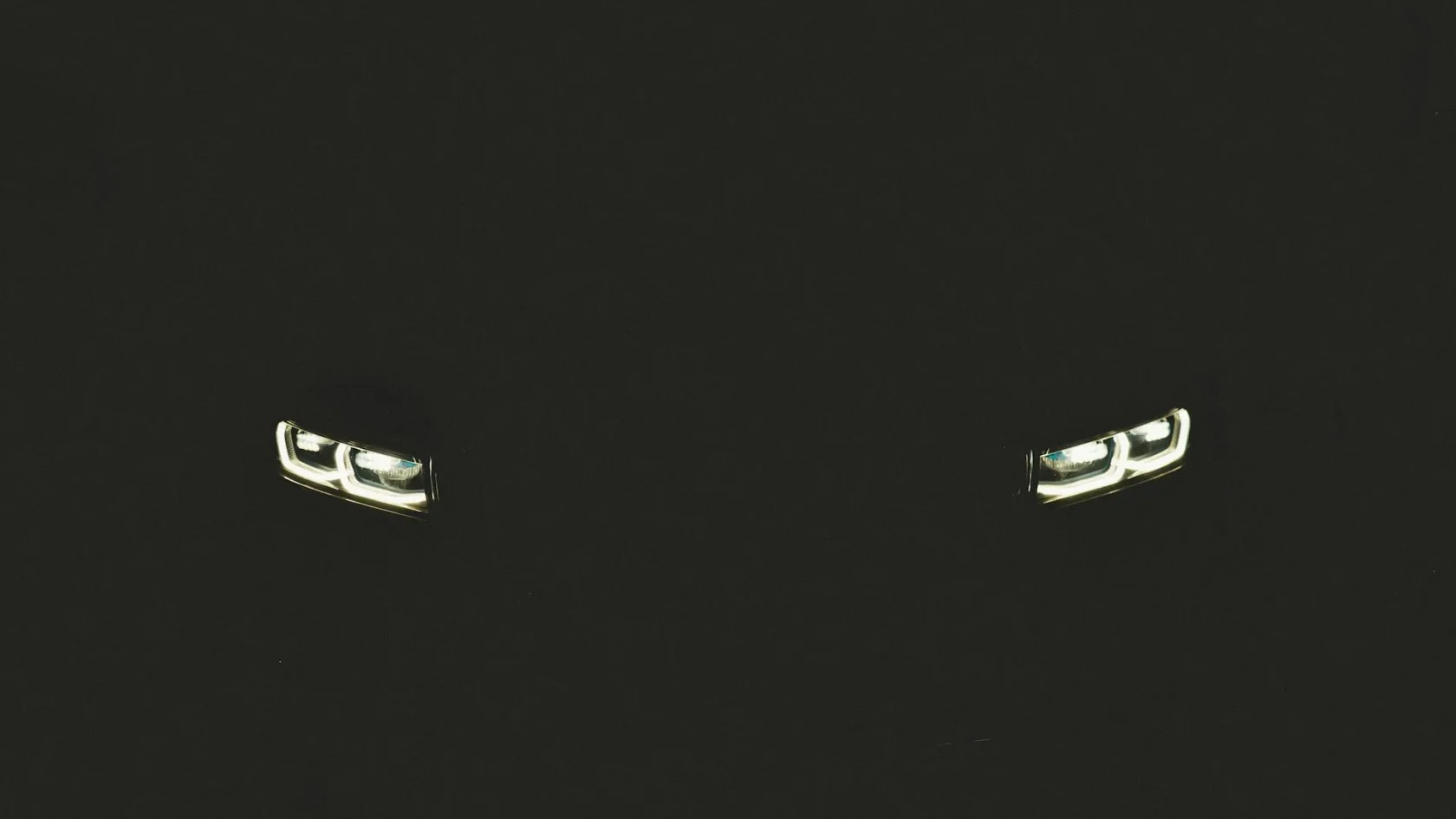
Automatic high beam assist, sometimes badged as auto high beam or high beam assist, does one job: it manages your high beams for you so you get maximum light when the road is clear and you never dazzle oncoming drivers. Turn it on, leave your headlight stalk in the auto position, and the car handles the rest. Here is exactly how it pulls that off.
The camera watching the dark
This feature runs on the same forward-facing camera mounted high on your windshield that powers lane and collision features. It is a genuinely busy little sensor. If you have never spotted it, the overview of where the forward ADAS camera is shows the usual mounting spot behind the rearview mirror.
At night, that camera is doing something specific. It is scanning the scene ahead for two distinct light signatures. It looks for the bright white points of oncoming headlights, and it looks for the red glow of taillights on cars ahead of you in your own lane. When it sees either one, it knows there is a vehicle that your high beams could blind, and it dims down to low beam. When the road ahead goes dark and empty again, it brings the brights back up.
The camera also reads the ambient brightness of the whole scene. In a lit-up town with streetlights everywhere, it keeps the high beams off because you do not need them and they would annoy everyone. Out on a pitch-black rural stretch, it turns them on aggressively because that is exactly where they help. To see how this one camera juggles so many jobs, the broader guide to the cameras and radar behind ADAS puts it in context.
When it switches your beams
The logic follows a few clear rules, and knowing them helps you predict the behavior instead of being surprised by it.
First, there is a speed floor. The system only activates above a set speed, commonly around 25 mph, because high beams are pointless in slow city crawling and would flicker constantly. Below that threshold it simply leaves your low beams on. Second, it needs genuine darkness. In daylight or bright dusk it stays dormant. Third, it reacts to any vehicle it detects, oncoming or ahead, by dimming, and restores the brights only when the road is clear.
How the handoff feels
On a good system, the transition from high to low beam is quick and smooth as an oncoming car approaches, then back to high once it passes. Some newer cars go further with adaptive or matrix headlights that dim only part of the beam, keeping the road lit while shadowing just the other driver.
That adaptive matrix approach is the next step up, and it is genuinely impressive when you see it, though it is still limited in some markets by regulation. For most drivers, the standard on-off version is what you have, and it does the core job well: bright when you are alone, dimmed when you are not.
Why it sometimes gets it wrong
No camera-based system is perfect, and automatic high beams have a handful of predictable quirks. Understanding them keeps you from either trusting the feature too much or giving up on it in frustration.
The camera identifies vehicles by their lights, so anything bright enough to look like a headlight or taillight can fool it. A highly reflective road sign can read as an oncoming light and cause a brief, unnecessary dim. A cyclist with a weak light, or a pedestrian with none at all, may not register, which is a real limitation because those are exactly the people you want your lights to reveal. Distant taillights around a curve can be missed until you round it.
- Reflective signs and bright reflectors can trigger a false dim.
- Cyclists and pedestrians with faint or no lights may not be detected.
- Cresting a hill or rounding a curve can delay detection of a car just out of view.
- A dirty or fogged windshield in front of the camera degrades everything.
That last point is the one I fixed most often. The whole feature depends on the camera seeing clearly, and a grimy windshield or a camera that is blocked by dirt, ice, or a sticker will make it sluggish or unreliable. Keep the glass clean right in front of the sensor and most complaints vanish.
Watch out
Automatic high beams can be slow to dim for a poorly lit cyclist or a pedestrian on a dark road, and they can miss a car around a sharp bend. Stay ready to override with the stalk the instant you see something the system has not reacted to. You are still the one responsible for not blinding others.
You can always take over
One thing I stress to every driver: automatic high beam assist never takes the manual control away from you. Pull or push the headlight stalk the way you always have and you instantly override the system for that moment. Flash someone, force the brights off in a spot where the camera is being dumb, or force them on when you want them; the feature yields to you every time.
This matters because there are situations where your judgment beats the camera. Approaching a cyclist you can see but the camera has not flagged, cresting a blind hill, or driving in fog where high beams actually hurt visibility, you should take charge. The system is a convenience, not an authority. Think of it the way you think about every other assist feature: a helpful backup that assumes an attentive human is still in the seat, the same principle behind whether you still need to pay attention at all, which you always do.
A quick story about a false trigger
A Ford owner once brought a truck in insisting the automatic high beams were broken because they flickered on a specific stretch of his commute every night. Everywhere else they behaved, but on that one road they kept dimming and brightening for no visible reason. He was sure the camera was failing.
I drove the route with him after dark. The culprit was a series of large reflective highway signs lining that section. Each one bounced his own high beams back brightly enough that the camera read them as oncoming headlights and dimmed, then brightened once past. Nothing was wrong; the camera was doing its job a little too well. Once he understood it, the flicker stopped bothering him, and he learned to flick the stalk to hold his brights through that stretch. Understanding the quirk was the whole fix.
Getting the best out of it
Automatic high beams reward two simple habits. Keep the windshield clean where the camera sits, because everything the feature does depends on that clear view, and do not be afraid to override it when your eyes see something it does not. On dark rural roads where you would otherwise be riding the stalk constantly, it is a genuine relief and it makes you a more considerate driver by never leaving your brights on in someone’s mirrors.
My honest take after calibrating so many of these cameras is that it is a modest feature that punches above its weight. It will not change your life, but on the right road at the right hour it quietly does a tedious job better than you would, and it keeps you from blinding the oncoming driver you did not see in time. For the wider view of how all these camera features fit together, the guide to how modern driver-assist systems work ties it in with the rest. The National Highway Traffic Safety Administration includes headlight and glare technologies in its overview of driver-assist features, which is worth a read for the official framing: NHTSA driver assistance technologies.
Frequently asked questions
The windshield camera watches the road ahead for the white light of oncoming headlights and the red glow of taillights on cars in front of you. When it detects either, it dims your high beams to low so you do not blind the other driver, then restores the brights once the road ahead is dark and clear. It also keeps the brights off in well-lit areas like towns.
Most systems only activate above a set speed, often around 25 mph, because high beams serve no purpose in slow city driving and would switch on and off constantly. Below that threshold the car simply leaves your low beams on. The system also requires genuine darkness, so it stays dormant in daylight and bright twilight.
The camera identifies vehicles by their lights, so bright reflective road signs and strong reflectors can look like oncoming headlights and cause a brief, unnecessary dim. A dirty windshield in front of the camera can also make the system erratic. You can always override it with the headlight stalk to hold your brights through a stretch where it misbehaves.
Yes. You can disable it in the vehicle's settings menu, and you can override it at any moment by using the headlight stalk the way you normally would to force the high or low beams. The feature never removes your manual control, so you stay able to flash other drivers or hold a specific beam whenever your own judgment calls for it.
Keep reading
Related guides
Semi-Autonomous Driving Levels Explained
Six levels, one honest question: is the person driving or the car? A former ADAS tech decodes the automation scale.
Read guide
How Adaptive Cruise Control Works
A former calibration tech explains the radar, the following-distance math, and how to actually use adaptive cruise without getting surprised.
Read guide
How Pedestrian Detection Systems Work
The forward camera and radar that watch for people, explained by a former ADAS calibration tech.
Read guide