Blind Spot Monitor Warning Light Guide
The mirror-side symbol behind blind spot monitoring, and why it goes dark in slush and snow.

Key takeaways
- A brief amber glow in the side mirror is normal and means a car is in your blind spot.
- A steady dash warning usually means a rear corner radar is dirty, iced, or blocked.
- The sensors hide in the rear bumper corners, so slush, mud, and a trailer can disable them.
- Clean the rear corners and drive a cycle; if it stays, suspect a fault or a needed calibration.
Blind spot monitoring is one of those features you stop noticing until the day it saves you. So when a warning light for it shows up on the dash, or the little icon in your mirror stops behaving, it is worth understanding what the car is telling you.
I calibrated the rear corner radars that drive this system for years, and I can tell you the confusion usually comes from one thing: there are two different lights involved. One lives in your mirror and is completely normal. The other lives on your dash and means the system needs attention. Once you can tell them apart, this stops being mysterious.
Let me walk through both, why the dash version appears, and how to clear it.
Two lights, two meanings

This trips up almost everyone, so it is the first thing to sort out.
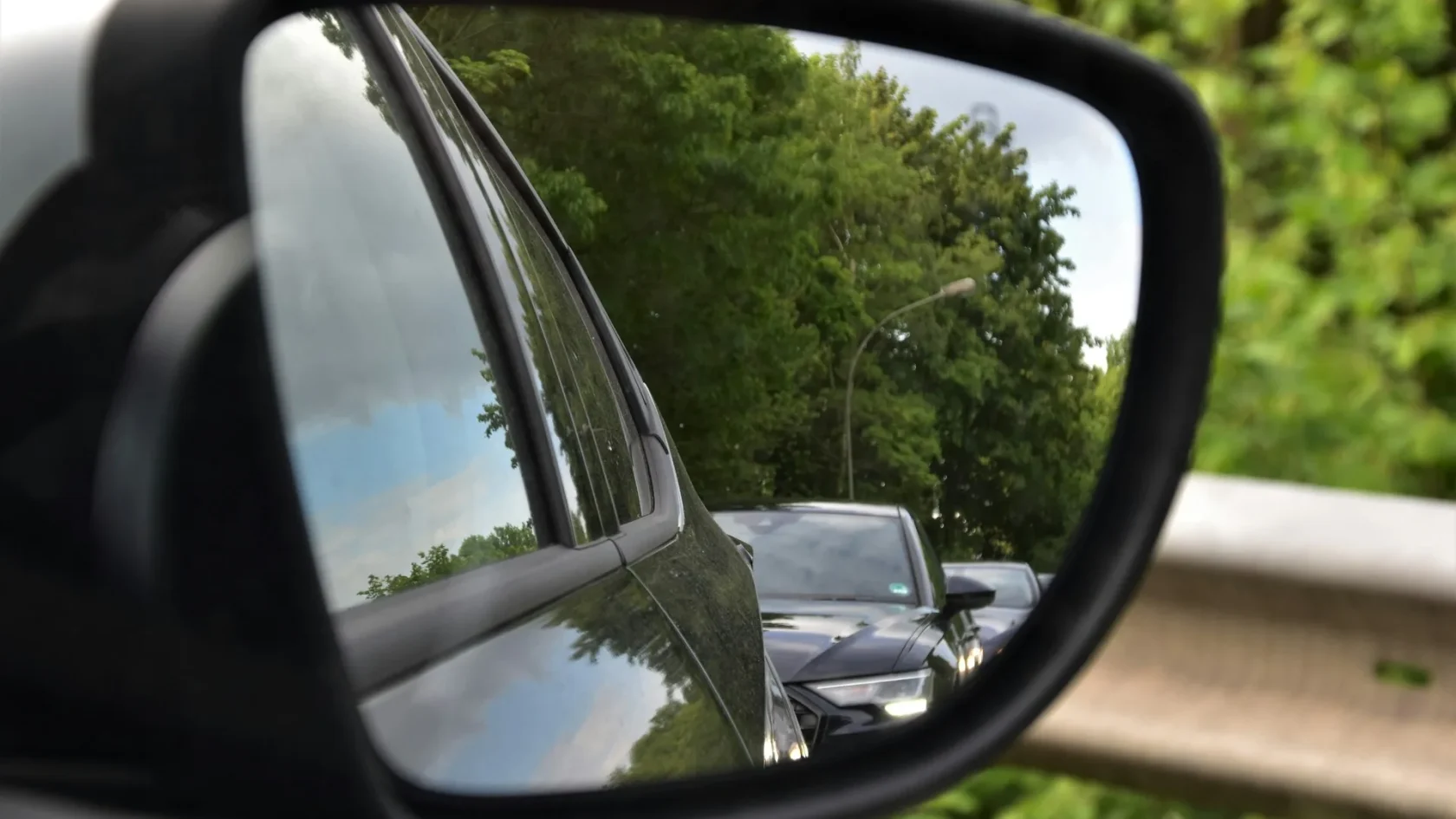
The small amber icon that glows in your side mirror is not a warning about your car. It is the feature working. It lights up when the radar detects a vehicle sitting in your blind spot, and many cars flash it and beep if you signal to change lanes into an occupied one. That glow is exactly what you want to see.
The warning light on the instrument cluster, often a car-with-arrows symbol or a text message like “blind spot unavailable,” is the one that means something is off. It tells you the blind spot system has switched itself off, usually because a rear sensor cannot see. That is the light this guide is really about.
Tip
Mirror icon glowing: normal, a car is beside you. Dash warning light steady: the system is off and needs a look. If you only see the mirror light doing its job, nothing is wrong.
Where the sensors live and why it matters
Blind spot monitoring runs on two radar units tucked into the rear corners of your car, behind the bumper cover on the left and right. That location explains almost every warning you will get. The overview of blind spot monitoring explained simply covers how they scan, and the piece on the blind spot radar sensor shows exactly where they sit.
Because they face rearward and low, the back corners of the car collect road spray, slush, and mud, and that is precisely where the radar is trying to see. A film of winter grime over the bumper corner is enough to blind it. The related guide on corner radar sensors explains why these particular units are so exposed.
Why the dash warning appears
The causes cluster tightly, and none of them are exotic.
- Slush, snow, or ice packed onto the rear bumper corners over the sensors.
- Mud or a heavy salt film after a wet drive, blocking the radar’s view.
- A trailer, bike rack, or cargo carrier that puts metal in the radar’s field and confuses it.
- A rear-end tap or bumper repair that knocked a sensor out of alignment.
- A dead battery or module reset that stored a fault code.
A trailer is a special case worth knowing. Many cars intentionally disable blind spot monitoring when they detect a trailer, because the trailer sits permanently in the blind zone and would trip the system nonstop. That is not a fault, it is by design, and it clears when you unhitch.
The feature that shares the same sensors
Here is something most owners never realize. Those same rear corner radars usually power a second feature: rear cross-traffic alert, the system that warns you about cars crossing behind while you back out of a parking space. Because they run on the same hardware, a blocked corner radar often takes both features down at once.
So if your blind spot light is on and your backing-out warning has also gone quiet, that is a strong clue the problem is a dirty or misaligned corner radar rather than two separate faults. The overview of rear cross-traffic alert explains how the two features overlap and why they tend to fail together.
Knowing this saves you from chasing two problems when there is really only one. Clean the corner, and you often get both features back in a single move.
How to clear a blind spot warning light
Work these in order. Most drivers fix it at the first step.
-
Clean both rear bumper corners
Wipe the lower rear corners of the car on both sides, even the sides that look clean. Winter slush is the number one culprit, and the radar sees through the paint from behind.
-
Remove anything hanging off the back
If a trailer, bike rack, or cargo box is fitted, take it off and see if the light clears. Metal in the radar’s field is a common trigger.
-
Drive a normal cycle
A few miles at road speed lets the system re-check itself. If the block is gone, the light goes out.
-
Reset or diagnose if it stays
If it persists, walk through the fixes for a blind spot monitor not working, which covers resets and what a lingering fault means.
Watch out
When this light is on, your blind spot coverage is gone. Physically turn your head and check over your shoulder before every lane change until it clears. Do not trust an empty mirror icon when the system has told you it is off.
When cleaning is not enough
If both corners are spotless, nothing is hanging off the back, and the light still will not clear, two possibilities remain. The first is a rear-end impact or bumper repair that shifted a radar’s aim. A blind spot sensor pointed slightly wrong reads the lanes beside you incorrectly and shuts down, and it needs recalibration to fix. The general guide on signs your ADAS needs recalibration helps you spot this.
The second is a genuine sensor or wiring fault, which a scan tool confirms by reading the stored code. That is the moment to bring in a shop instead of guessing further. For the safety case behind these systems, Consumer Reports keeps a useful plain-language overview: Consumer Reports blind spot warning guide.
So keep your approach simple and in order. Clean both rear corners, pull off any trailer or rack, drive a cycle, and only reach for a scan or calibration if you took a hit to the back of the car or the light refuses to go. That handles the blind spot warning for nearly everyone, and it usually costs nothing but a rag and a short drive.
Frequently asked questions
A steady blind spot warning on the dash means the system switched off because a rear corner radar cannot see clearly. The usual cause is slush, snow, ice, or mud packed onto the rear bumper corners where the sensors hide. Clean both lower rear corners of the car and drive a few miles, and the light typically clears.
No, that one is the system working correctly. The mirror icon glows to tell you a vehicle is sitting in your blind spot, and it often flashes and beeps if you try to change lanes into an occupied one. That light is exactly what you want to see. The warning to worry about is a steady light on the dashboard itself.
Often, yes, and it is by design rather than a fault. A trailer sits permanently in the blind zone, so many cars disable blind spot monitoring while a trailer is detected to avoid constant false alerts. The feature comes back on once you unhitch the trailer and the system no longer sees it.
Yes, the car is safe to drive, but your blind spot coverage is gone while the light is on. Turn your head and physically check over your shoulder before every lane change until you clear it. Do not rely on an empty mirror icon when the system has reported that it is unavailable.
Keep reading
Related guides
Clean Front Radar Message: Why It Shows
The Clean Front Radar message is your car asking for a wipe, not announcing a breakdown. Here is the full story.
Read guide
Lane Assist Unavailable Message Decoded
When the car stops nudging you between the lines, it is usually because it cannot see them.
Read guide
Blind Spot System Off Message Guide
Sometimes the blind spot monitor is off because you switched it off, and sometimes because the car did.
Read guide