Blind Spot Monitoring Explained Simply
What the rear radar watches, the two-stage warning, and why the mirror light sometimes glows for a guardrail, from a former ADAS tech.

Key takeaways
- Blind spot monitoring uses two radar sensors in the rear bumper corners to watch the zones your mirrors miss.
- It warns in two stages: a steady mirror light when a car is present, a flashing beep if you signal toward it.
- The same rear radars usually also power rear cross-traffic alert for backing out of parking spaces.
- It goes dark when the rear corners are caked with snow, ice, or mud, and it never replaces a head check.
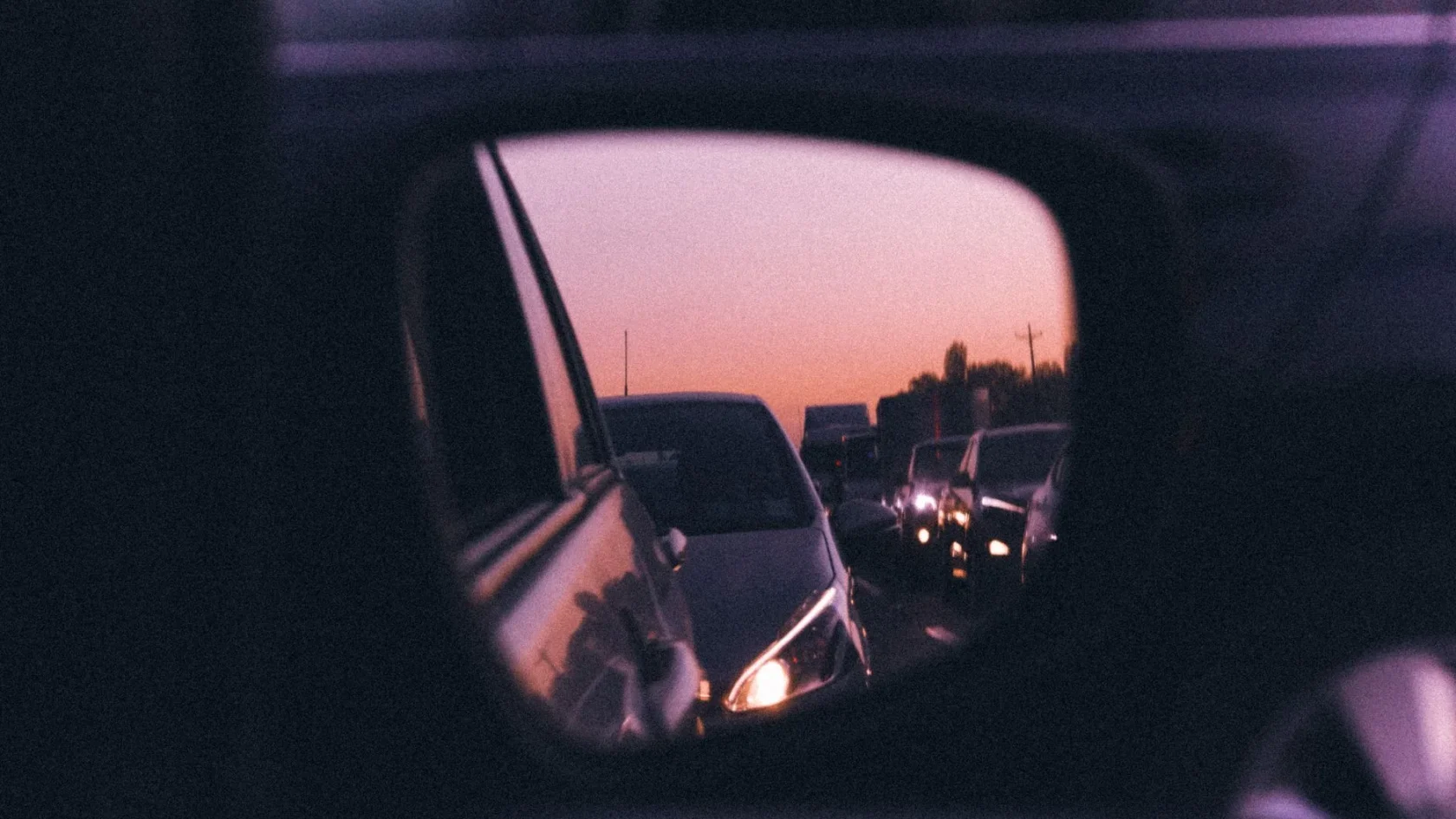
You check your mirror, it looks clear, you start to move over, and a little amber light in the mirror glass lights up like it is scolding you. That light is blind spot monitoring, and it just caught the one car your mirrors could not show you. Once you have driven with it, merging on a busy highway without it feels strangely naked.
I calibrated the radar units behind this feature for years, and the questions I got were always the same. What is actually watching back there? Why does the light sometimes come on for a guardrail? Why did it go dark in the snow? None of it is complicated once you know what the sensors are doing.
Here is the plain-English version: what blind spot monitoring watches, how it warns you, and why it occasionally cries wolf or goes quiet. By the end you will read that little mirror light with confidence.
What blind spot monitoring actually watches
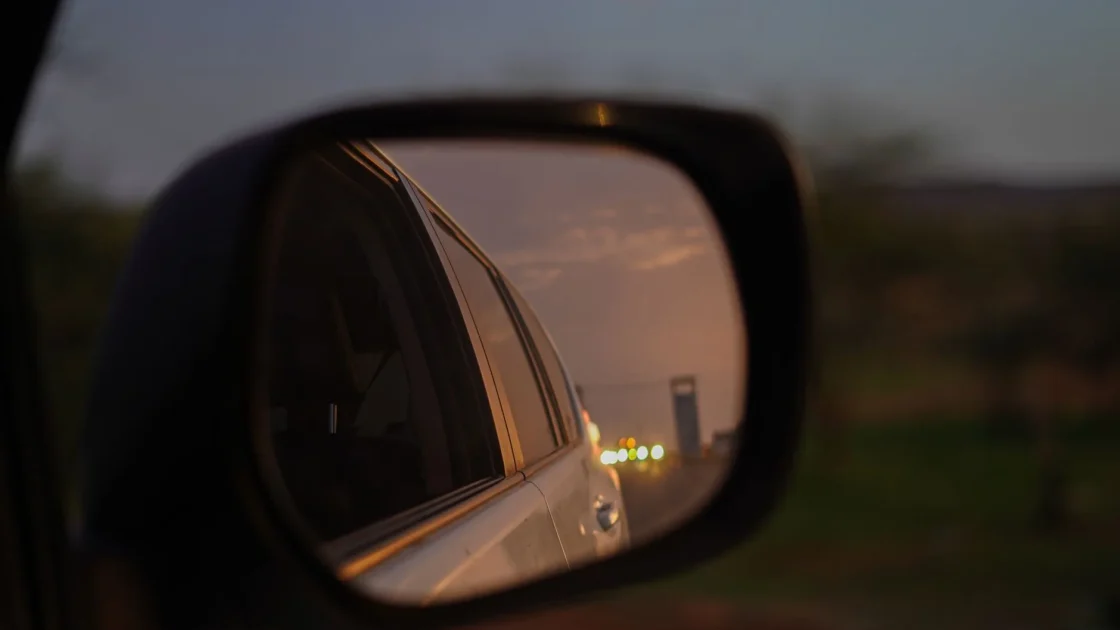
Your blind spots are the areas beside and slightly behind your car that your mirrors do not cover, the zones where a car can hide right up until it appears at your door. Blind spot monitoring, often shortened to BSM, exists to watch those zones for you and tell you when something is there.
It does the watching with radar, almost always two small units tucked inside the rear bumper corners, one on each side. They send radio waves outward and read the echoes to detect a vehicle sitting in the blind zone or coming up fast from behind. Because it is radar, it works in the dark and in light rain, which a camera would struggle with. I go deeper on this exact hardware in the guide to blind spot radar sensors, and on the corner-mounted units in corner radar sensors.
When a car enters the zone, the system lights a small symbol, usually in or beside the side mirror on that side. That is the passive warning: a glance tells you someone is there. It is watching both sides, all the time, whenever you are moving.
How it warns you, in two stages
Blind spot monitoring almost always works in two escalating stages, and knowing them helps you trust it.
The first stage is passive. A car is in your blind spot, so the mirror light glows. You did nothing to trigger a bigger alert; the system is just keeping you informed. If you never signal that way, it stays a quiet glow.
The second stage is active. If you turn on your signal toward a side that has a car in the blind zone, the system escalates: the light flashes, and most cars add a beep or a buzz in the wheel or seat. It is saying, clearly, “not yet.” That is the alert that has saved countless sideswipes.
Tip
Treat the steady mirror light as information and the flashing, beeping version as a firm stop. If you signal and the light starts flashing, wait. The system has confirmed a vehicle is in the very spot you were about to move into. It is not being fussy; it is catching what your mirror missed.
Its close cousin: rear cross-traffic alert
The same rear-corner radars usually power a second feature, and people often lump the two together. Rear cross-traffic alert watches for cars crossing behind you while you back out of a parking space or driveway, exactly the situation where your view is blocked by the vehicles parked beside you.
When you are in reverse and a car approaches from the side, it beeps and often flashes an arrow showing which direction the threat is coming from. It is genuinely one of the most useful things in a crowded parking lot. I broke it down fully in the guide to rear cross-traffic alert. Same sensors, different job.
Blind spot monitoring watches the lane beside you while you drive. Rear cross-traffic alert watches the lane behind you while you back up. Two features, one pair of radar units in the back bumper corners.
Why it lights up for nothing, or goes dark
The two complaints I heard most were opposite: “it warns when nothing is there” and “it stopped warning at all.” Both usually have simple explanations.
False alerts often come from guardrails, concrete barriers, or parked cars close alongside you, which the radar can read as a vehicle in the zone. A little of this is normal, especially on narrow roads. Persistent false alerts, though, can mean a sensor is dirty or slightly misaimed.
Going dark is usually about the sensor being blocked. Because the radars live in the rear bumper corners, they get caked with road spray, mud, snow, and ice, and a covered radar simply cannot see, so the car switches the feature off until it can. A warning light for the system is the car telling you exactly that.
- Mud, snow, or ice packed over the rear bumper corners, blocking the radar.
- A sensor knocked out of aim after a rear-end bump or bumper repair.
- Heavy road spray or a thick layer of dirt across the back of the car.
- A stored fault after a dead or disconnected battery.
- The feature simply switched off in the menu.
Watch out
Blind spot monitoring does not replace a head check. It can miss a fast-approaching motorcycle, a bicycle, or a car in the exact instant its sensor is blocked. Always glance over your shoulder before you change lanes. The light is a second opinion, not a substitute for your own eyes.
Fixing it when it quits
If your blind spot monitor throws a warning or stops working, start with the easy stuff before you spend a dime. Clean the rear bumper corners thoroughly, both sides, since that solves a surprising share of cases. If it started right after a rear bumper repair or a rear-end tap, the sensor is likely out of alignment and needs recalibration, not replacement.
I walked through the full troubleshooting order, from the free checks to when a shop visit is warranted, in the guide to blind spot monitor not working. And because this feature is one member of a much larger family that shares sensors and logic, it helps to see where it fits; that map is in how modern driver assist systems work.
The National Highway Traffic Safety Administration counts blind spot detection among the driver-assist technologies it tracks for safety benefit, and you can read its plain overview of driver assistance technologies for context on why features like this matter.
My honest advice after aiming hundreds of these sensors: keep the back corners of your car clean, learn the difference between the steady glow and the flashing alert, and never let either one replace a quick look over your shoulder. Used that way, blind spot monitoring turns the most nerve-racking part of highway driving, the merge you cannot fully see, into something you handle with a glance and a clear conscience.
Frequently asked questions
It uses radar, almost always two small sensors hidden inside the rear bumper corners, one on each side. They send out radio waves and read the echoes to detect a vehicle sitting in the blind zone or approaching fast from behind. Because it is radar rather than a camera, it works in the dark and in light rain.
The steady mirror light means a car is simply present in your blind spot; it is passive information. The flashing light, usually with a beep or buzz, appears when you signal toward a side that has a car in the blind zone. Treat the steady glow as a heads-up and the flashing, beeping version as a firm signal to wait.
Guardrails, concrete barriers, and parked cars close alongside you can be read by the radar as a vehicle in the zone, so a little false alerting on narrow roads is normal. Persistent false alerts, though, often mean a sensor is dirty or slightly out of alignment, commonly after a rear bumper knock, and cleaning or recalibration usually resolves it.
No. It is a second opinion, not a substitute for a proper head check. It can miss a fast-approaching motorcycle or bicycle, and it goes blind the moment its sensor is covered by mud, snow, or ice. Always glance over your shoulder before changing lanes, and use the light as backup rather than your only check.
The radar sensors live in the rear bumper corners, exactly where snow, ice, and road spray build up. A covered radar cannot see, so the car switches the feature off and often shows a warning until the sensor is clear. Wiping the rear bumper corners clean usually restores it right away; there is rarely anything actually broken.
Keep reading
Related guides
Traffic Jam Assist: What It Does
The feature that handles the crawl of rush-hour traffic for you, and the fine print on why you cannot check out.
Read guide
How Automatic High Beams Work
The camera that flips your brights on and off for you at night, and how to get it to behave.
Read guide
How Trailer Assist Works With ADAS
Hitch up a trailer and your driver-assist features change. A former calibration tech explains what shifts and why.
Read guide