Traffic Jam Assist: What It Does
The feature that handles the crawl of rush-hour traffic for you, and the fine print on why you cannot check out.

Key takeaways
- Traffic jam assist combines adaptive cruise control and lane centering to handle low-speed, stop-and-go highway traffic.
- It steers, accelerates, and brakes for you in a jam, but it is a hands-on assist, not self-driving.
- It runs on the same front radar and windshield camera as your other assist features and shares their weaknesses.
- Most systems cap it at low speeds and demand you keep your hands on the wheel and eyes on the road.
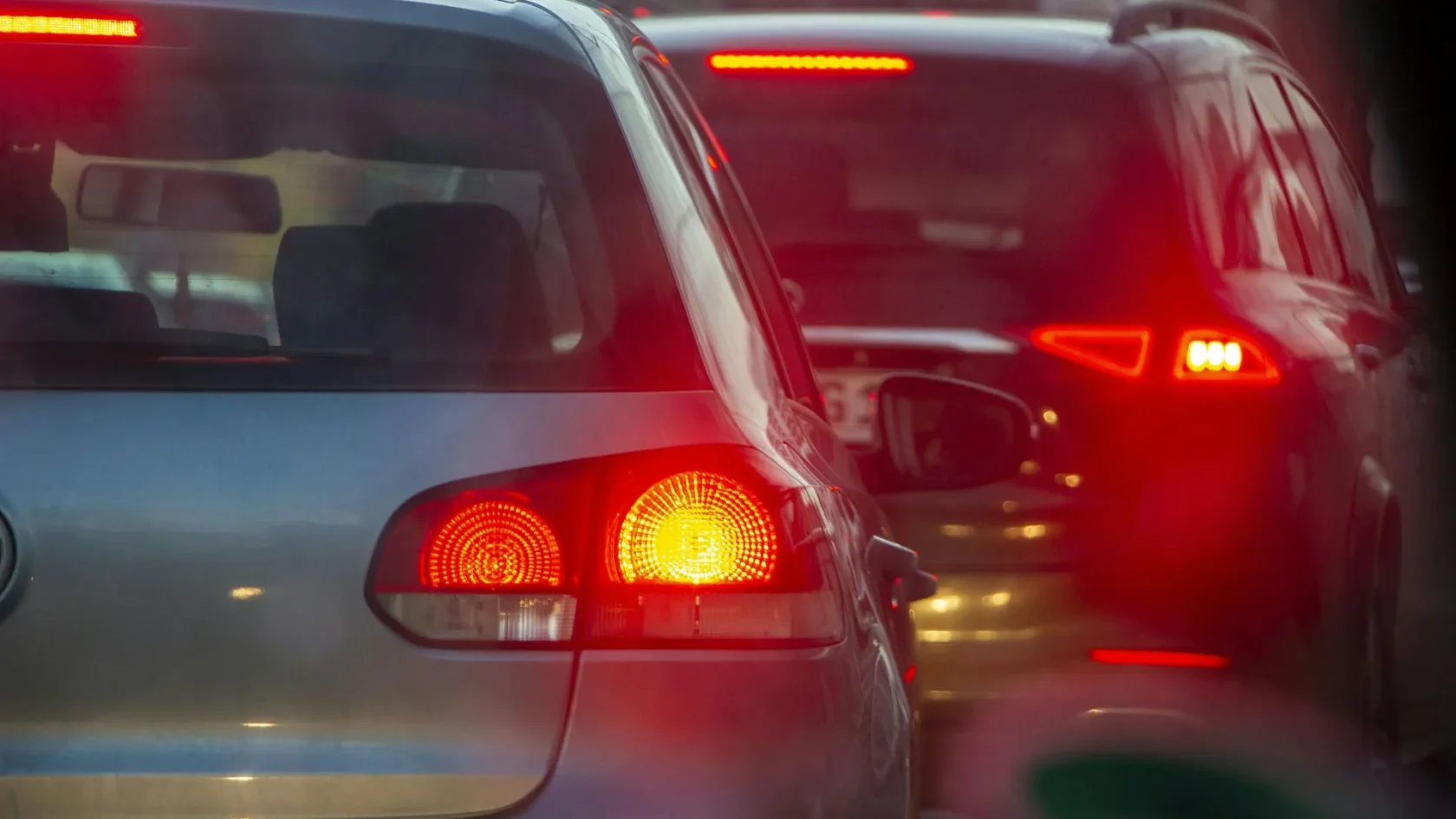
Rush-hour traffic is where driving stops being driving and starts being a chore. Creep forward, brake, creep again, watch the brake lights ripple ahead, repeat for forty minutes. Your left foot aches, your patience frays, and you have not gone three miles. Traffic jam assist is the feature aimed squarely at that misery, and on the right stretch of clogged highway it genuinely changes how the commute feels.
I worked on the sensors behind these systems for years, and traffic jam assist is one of the features people misunderstand in both directions. Some think it is a gimmick that barely works. Others think it means they can eat a sandwich and answer email while the car drives itself. Both are wrong. It is a real, useful tool with a real, firm boundary, and understanding that boundary is the whole game.
At its core, traffic jam assist is two features you may already know, bundled together and tuned for low speeds. It takes adaptive cruise control, which handles the gas and brake, and adds lane centering, which handles the steering. Put them together in slow traffic and the car will follow the vehicle ahead, keep its lane, and stop and go with the flow, all while you supervise. Here is what is really happening.
Two systems working as one
To understand traffic jam assist, you have to understand the two pieces it is built from. The first is adaptive cruise control, which uses front-facing radar to measure the gap to the car ahead and manages your speed to hold that gap. If you are fuzzy on it, the explainer on how adaptive cruise control works is the place to start, because everything here builds on it.
The second piece is lane centering, which uses the windshield camera to read the lane lines and actively steers to keep you in the middle. This is a step beyond simply warning you about drift; it is hands-on steering. The difference between merely nudging and truly centering is laid out in the comparison of lane keeping assist versus lane centering, and traffic jam assist relies on the centering end of that spectrum.
Stack those two together and tune them for congestion, and you get a car that follows, steers, and stops on its own in a jam. The radar handles the distance, the camera handles the lane, and software blends them so the car behaves smoothly even as traffic stutters. It is less a brand-new invention than a smart combination of parts your car already had.
What it does in an actual traffic jam
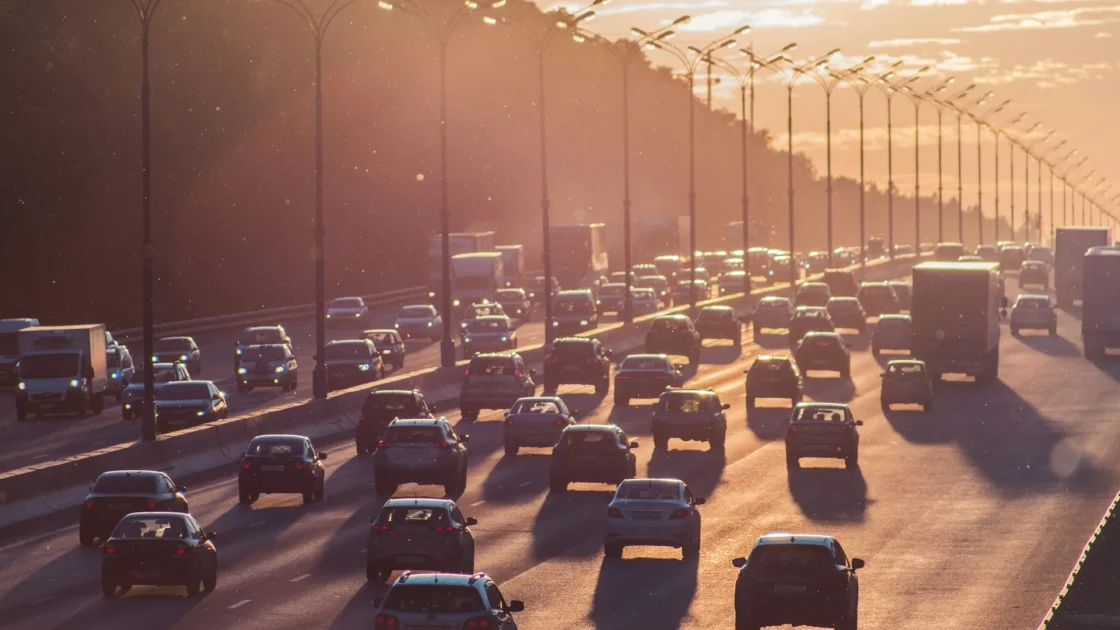
Picture a real scenario. You are on a packed interstate at 4:30 on a Friday, moving at a crawl between five and twenty-five miles per hour. You switch traffic jam assist on. From that point, the car does three jobs.
It follows the car ahead, matching its speed and keeping a set gap. When traffic stops, it stops. When traffic moves, it moves, often without you touching a pedal. It steers to stay centered in the lane, following the gentle curves of the road. And it manages the endless stop-and-go so your legs get a rest.
Tip
Traffic jam assist works best in dense, slow, predictable traffic with clear lane markings. On an open highway at speed, its bigger sibling, highway driving assist, takes over the job. Match the feature to the traffic and it feels far more natural.
That last point matters. Traffic jam assist is specifically the low-speed tool. Once traffic opens up and you are cruising at highway pace, a different and often more capable system handles it. The guide to highway driving assist and how it works covers that higher-speed cousin, and many cars blend the two so smoothly you barely notice the handoff. The two together cover the full range from gridlock to open road.
The hard limit you cannot ignore
Here is where I have to be blunt, because this is where people get hurt. Traffic jam assist is a driver-assist feature, not an autopilot. It is hands-on. You must keep your hands on the wheel and your eyes on the road the entire time, and the car is watching to make sure you do.
Most systems use a torque sensor in the steering, a camera pointed at your face, or both to confirm you are still engaged. Let go of the wheel and you get an escalating series of warnings: a message, a chime, a flashing light, and finally the system disengages and may even slow the car to a stop. This is not the car being fussy. It is the fundamental design. To grasp how the car keeps tabs on you, the explainer on driver attention monitoring covers the sensors involved.
| Traffic jam assist is | Traffic jam assist is not |
|---|---|
| A hands-on aid that steers and paces in slow traffic | A self-driving system you can ignore |
| A way to reduce fatigue in stop-and-go crawls | Permission to look at your phone or read |
| A backup that keeps you centered and spaced | A replacement for watching the road |
| Reliable when lines and radar targets are clear | Trustworthy in snow, heavy rain, or faded lanes |
If you want the plain truth about where these systems sit on the spectrum from driver aid to autonomy, the piece on whether ADAS is the same as self-driving answers it directly. The short version: no car you can buy at a normal dealership drives itself, and treating traffic jam assist like it does is how people end up in crashes.
Why it drops out
Traffic jam assist leans on the same front radar and windshield camera as the rest of your assist suite, so it inherits all of their weaknesses. When it refuses to engage or quits mid-jam, the cause is usually one of a familiar handful.
- A blocked front radar: mud, ice, or a bug-caked emblem in front of the bumper radar kills the distance-keeping half.
- A blinded camera: low sun, snow, or a dirty windshield stops the lane-centering half from reading the lines.
- Faded or missing lane paint, common in construction zones, which leaves the camera nothing to follow.
- Heavy rain or snow overwhelming both sensors at once, which is the car protecting you rather than failing.
A blocked front radar is the single most common reason the whole feature refuses to work, because without a clean radar return the car will not manage the gap ahead. If you get a message that the front radar is blocked, the fix on clearing a front radar blocked message walks through it. Clean the sensor, drive a short cycle, and it usually returns.
Watch out
Traffic jam assist can disengage suddenly if it loses the lane lines or the radar target, sometimes with little warning. Be ready to take full control instantly at all times. Never let the smoothness of a good stretch lull you into treating the feature as if it were driving for you.
A note from the calibration bay
I had a VW come through once whose owner complained that traffic jam assist worked perfectly on his morning commute but quit every afternoon on the way home. Same road, same traffic, wildly different behavior. It baffled him.
The answer was the sun. His westbound evening drive put the low sun directly into the windshield camera, washing out the lane lines the centering half needed. In the morning, with the sun behind him, the camera saw fine. Nothing was broken; the feature was doing exactly what it should by backing off when it could not see. I explained it, he started using a sun visor and expecting the drop-out, and he stopped worrying. Sometimes the fix is understanding, not repair.
Is it worth using?
After years around this technology, my honest verdict is that traffic jam assist is one of the more quietly valuable features on a modern car, precisely because it targets the worst part of driving. Nobody enjoys the stop-and-go grind, and handing the tedious pedal work to the car while you supervise makes a long commute far less draining.
The catch is the one I keep hammering: you have to stay in the loop. Use it to reduce fatigue, not to check out. Keep your hands on the wheel, keep your eyes up, and let it handle the crawl while you handle the judgment. Do that and it earns its place. Treat it as a chauffeur and it will eventually put you in a fender bender, because it was never built to be one. The Insurance Institute for Highway Safety has tested these partial-automation systems closely and is candid about their limits, which is worth reading before you lean on any of them: IIHS advanced driver assistance.
Frequently asked questions
No. Traffic jam assist is a hands-on driver-assist feature that steers, accelerates, and brakes in slow traffic while you supervise. It is not autonomous, and every system requires you to keep your hands on the wheel and your eyes on the road. If you stop paying attention, the car will warn you and then disengage, because it was never designed to drive itself.
It is tuned for low, congested speeds, typically from a full stop up to somewhere around 25 to 40 mph depending on the automaker. Above that range, a separate feature called highway driving assist usually takes over the job for open-road cruising. Many cars blend the two so the transition from a crawl to highway speed feels smooth and continuous.
It relies on both the front radar and the windshield camera, so anything that blinds either one will disengage it. Common causes are a blocked or dirty front radar, low sun glare on the camera, faded lane markings, and heavy rain or snow. Clean the radar and windshield, and expect the system to back off on its own when conditions genuinely prevent it from seeing.
Yes, on nearly every car. The system uses a steering torque sensor, a driver-facing camera, or both to confirm you are still engaged, and it escalates through warnings before shutting off if you let go. Traffic jam assist reduces the fatigue of stop-and-go driving, but it is a supervised aid, not a substitute for an attentive driver with hands on the wheel.
Keep reading
Related guides
How Automatic Emergency Braking Works
The sensors, the escalation from beep to brake, and the honest limits of the assist feature with the clearest life-saving case.
Read guide
Blind Spot Monitoring Explained Simply
What the rear radar watches, the two-stage warning, and why the mirror light sometimes glows for a guardrail, from a former ADAS tech.
Read guide
Cross-Traffic Braking: How It Works
The alert warns you; this stops the car. A former calibration tech explains cross-traffic braking and its real limits.
Read guide