How Automatic Emergency Braking Works
The sensors, the escalation from beep to brake, and the honest limits of the assist feature with the clearest life-saving case.

Key takeaways
- Automatic emergency braking watches the gap to the object ahead and brakes if a crash looms and you are not reacting.
- It escalates: a collision warning beep first, then pre-charged brakes, then full automatic braking.
- Even when it cannot fully avoid a crash, cutting impact speed makes the hit far less severe.
- It struggles with cross-traffic, sudden cut-ins, and bad weather, so keep driving as if it were not there.
Of all the driver-assist features on a modern car, this is the one I would fight hardest to keep. Automatic emergency braking is the system that stomps the brakes when you cannot, or will not, in time. It is the difference between a scare and a wreck, and it works in the fraction of a second where human reactions run out.
I spent years calibrating the radar and cameras that feed it, and I have watched the data on how much it cuts rear-end crashes. It is not a gimmick. But it is also widely misunderstood, and drivers who misjudge what it can and cannot do sometimes lean on it in ways that get them hurt.
So here is the straight explanation: what automatic emergency braking is actually watching, how it decides to intervene, and exactly where its limits sit. No brochure gloss.
What the system is watching for
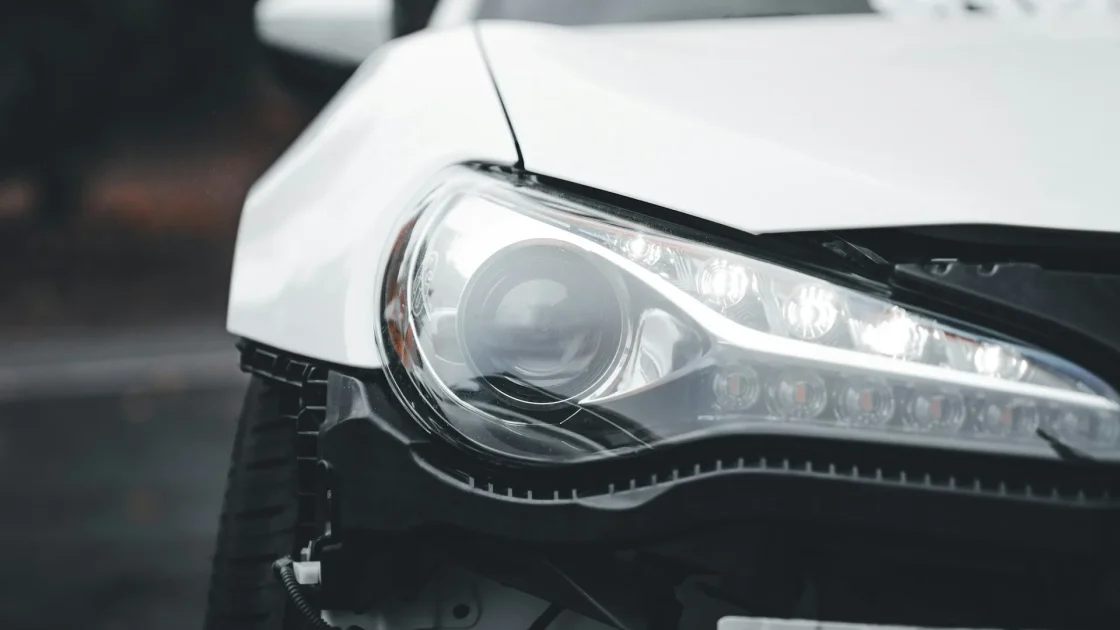
Automatic emergency braking, often shortened to AEB, is built to spot an imminent collision with something in front of you and slow or stop the car if you are not reacting. To do that, it needs to measure two things constantly: how far away the object ahead is, and how fast that gap is closing.
Most systems use radar for the distance-and-speed measurement, usually a unit hidden behind the grille or bumper, and add the windshield camera to identify what the object is: a car, a person, a cyclist. The radar is the range-finder; the camera is the eyes that tell a stopped car from an overpass shadow. I explain the range-finding hardware in the guide to car radar sensors, and where it hides in the radar sensor behind the bumper.
Running the two together, the computer builds a simple but urgent picture: there is a car 30 feet ahead, you are closing at 25 mph, and you are not braking. If that math crosses a danger threshold, the system acts.
How it decides to step in
AEB does not just slam the brakes the instant it sees something. It escalates in stages, and understanding the stages tells you a lot about the beep you sometimes hear.
-
It warns first
When a crash starts to look likely, the car fires a forward collision warning: a loud beep, often a flashing red light on the windshield or dash. This is your cue to brake. That warning has its own dashboard symbol, which I decode in the guide to the forward collision warning light.
-
It pre-charges the brakes
If you still are not reacting, the system quietly primes the brakes so they bite the instant you or it presses them. Some cars also tighten the seatbelts.
-
It brakes for you
If the gap keeps closing and you have done nothing, the car applies the brakes itself, hard, to avoid the crash or at least cut the speed of impact.
Note
Even when it cannot fully avoid a crash, automatic emergency braking still helps by cutting your speed before impact. A crash at 15 mph instead of 35 mph is a dramatically less severe one. Slowing the hit, not just preventing it, is a core part of the job.
What it can and cannot see
This is the part that matters most, because trusting AEB past its limits is where people get hurt. It is very good at the scenario it was built for: a car ahead of you in your lane, slowing or stopped, that you are approaching too fast. Newer systems also detect pedestrians and cyclists, sometimes at night, which I cover in the guide to how pedestrian detection systems work.
Where it struggles is the edges. Cross-traffic at an intersection, a car turning across your path, an animal darting out, or an object at an odd angle can all fall outside what it reliably catches. Heavy rain, snow, fog, or a sensor caked in road grime degrade it fast, because a blind radar or camera cannot measure a threat. And it works best within a speed band; extremely low or very high closing speeds can be outside its design.
Watch out
Automatic emergency braking is a last-resort backup, not a reason to follow closer or brake later. It cannot catch every situation, especially cross-traffic, sudden cut-ins, or bad weather. Drive exactly as you would in a car without it, and let it be the safety net you hope never to need.
How well it actually works
The honest answer is that it works well and the data proves it. The Insurance Institute for Highway Safety has found that cars with automatic emergency braking have markedly fewer rear-end crashes, and its research on advanced driver assistance is worth reading if you want the numbers. This is one of the few assist features with a solid, measurable safety payoff.
That said, “works well” is not “works always.” I dug into the real-world reliability, including the false activations and the misses, in the guide to how reliable automatic braking is. The summary: trust it as a backup, do not treat it as a driver. And because it is one piece of a larger safety net, seeing how it coordinates with the other features helps; that overview is in how modern driver assist systems work.
False braking and phantom stops
Every so often AEB brakes when it should not: a phantom stop for an overpass, a manhole cover, a car that was actually turning out of your path. It is startling and, on a busy road, briefly unsettling. The good news is that it is rare and usually harmless, and it often points to a sensor that needs cleaning or a camera that drifted out of aim.
If your car brakes for ghosts repeatedly, or if AEB throws a warning and switches off, the usual culprits are a dirty or blocked sensor, bad weather, or a calibration that slipped after a windshield replacement or front-end repair. The camera and radar have to be aimed precisely, and body work is the classic reason they are not. A recalibration fixes far more of these complaints than a new part ever does.
My honest take after years of aiming these systems: automatic emergency braking is the assist feature with the clearest life-saving case, and I would never buy a car without it. Keep the sensors clean, get it recalibrated after any glass or bumper work, and above all keep driving as if it were not there. Used that way, it sits quietly in the background and, on the one bad day you never see coming, it does the thing you could not do in time.
Frequently asked questions
No. Most systems are tuned for a speed band, and their behavior differs between low-speed city driving and highway speeds. Some low-speed city systems can fully stop the car, while at highway speeds the system may only reduce impact speed rather than avoid the crash entirely. Very low or very high closing speeds can fall outside the design. Check your owner's manual for specifics.
Many newer systems detect pedestrians and some detect cyclists, occasionally even at night, but coverage varies widely by model and year. Older systems may only react to vehicles. Pedestrian detection is harder than vehicle detection and degrades in poor light and bad weather, so never assume it will always catch a person stepping into the road. Treat it as a bonus, not a guarantee.
Occasional false or phantom braking can happen when the system misreads an overpass, a manhole cover, or a car that was actually turning out of your path. It is usually rare and harmless. If it happens repeatedly, the likely cause is a dirty or blocked sensor, or a camera or radar knocked out of alignment after a windshield or bumper repair, which a recalibration fixes.
Most cars let you disable or reduce it through a dashboard menu, and it often re-enables itself at the next start. Turning it off is occasionally useful, for example on a rough off-road trail where it might misfire, but for normal driving it is one of the most valuable safety features you have, so leaving it on is strongly advisable.
Keep reading
Related guides
Semi-Autonomous Driving Levels Explained
Six levels, one honest question: is the person driving or the car? A former ADAS tech decodes the automation scale.
Read guide
How Pedestrian Detection Systems Work
The forward camera and radar that watch for people, explained by a former ADAS calibration tech.
Read guide
Blind Spot Monitoring Explained Simply
What the rear radar watches, the two-stage warning, and why the mirror light sometimes glows for a guardrail, from a former ADAS tech.
Read guide